NYC Ballet 2026: Coppélia
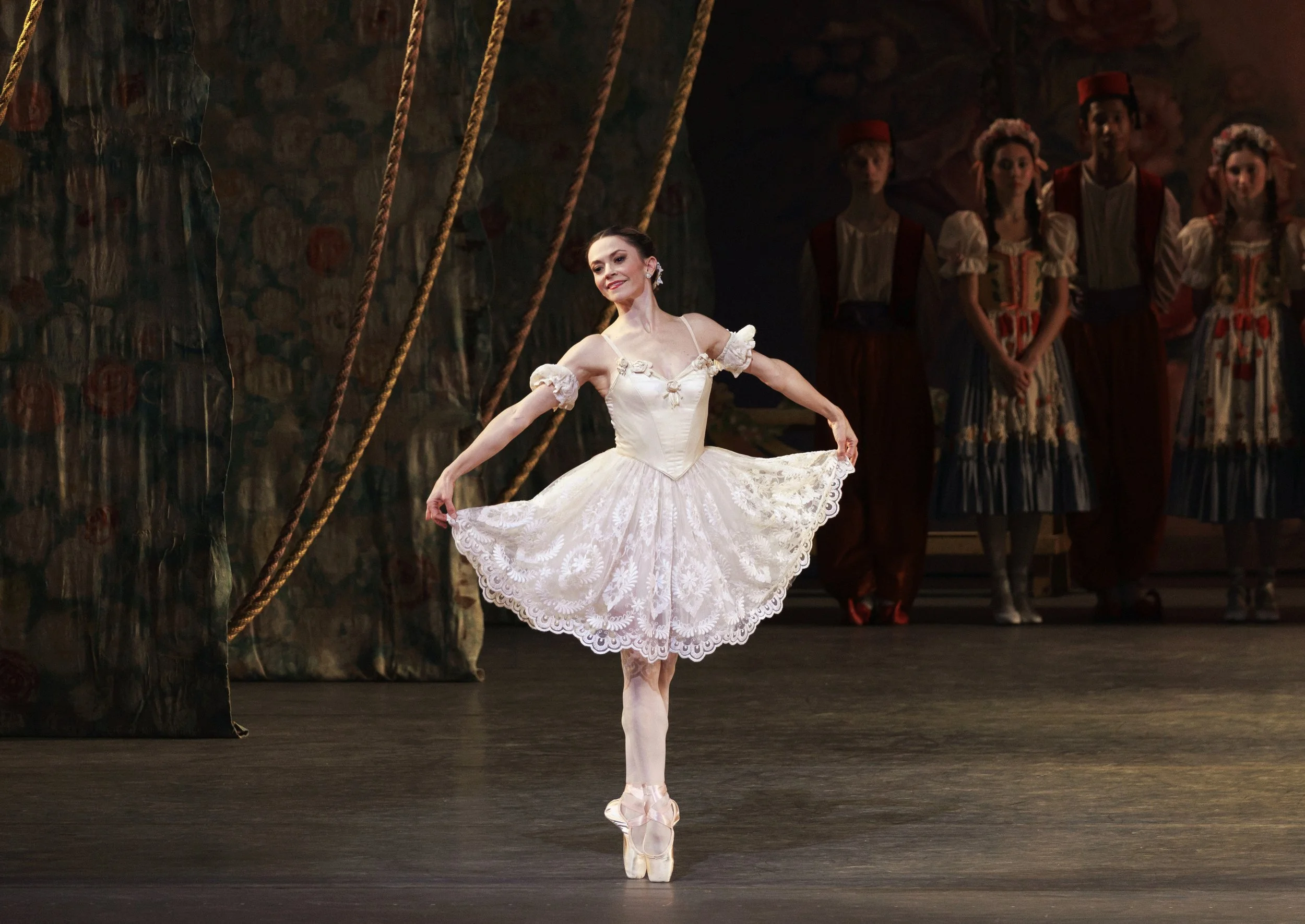
Megan Fairchild in George Balanchine and Alexandra Danilova’s Coppélia. Photo credit: Erin Baiano
On May 22, 2026, New York City Ballet raised the curtain on this season’s run of ‘Coppélia.’ Balanchine’s charming comedy saw gorgeous expression that evening in what was very much a special performance.
Leading the orchestra as usual was company conductor Andrew Litton, whose insight into Delibes’ enchanting score was clear throughout the night. From the prelude’s transition from a romantic theme into a bold and vivacious pastoral texture, there was always a depth which fleshed out moments with beauty, humor, and much to savor.
In the role of Swanhilda, principal dancer Megan Fairchild brought her very best as she related the village girl’s passion, curiosity, and humor, all to splendid effect. Her cheery introduction carried well across jubilant valse as she initially tried to gain the attention of the aloof Coppélia; after a series of flustered spins, this Swanhilda soon took her interest elsewhere, ending this opening number with a flair that focused more on her own confidence rather than rebuffing the unmoving doll.
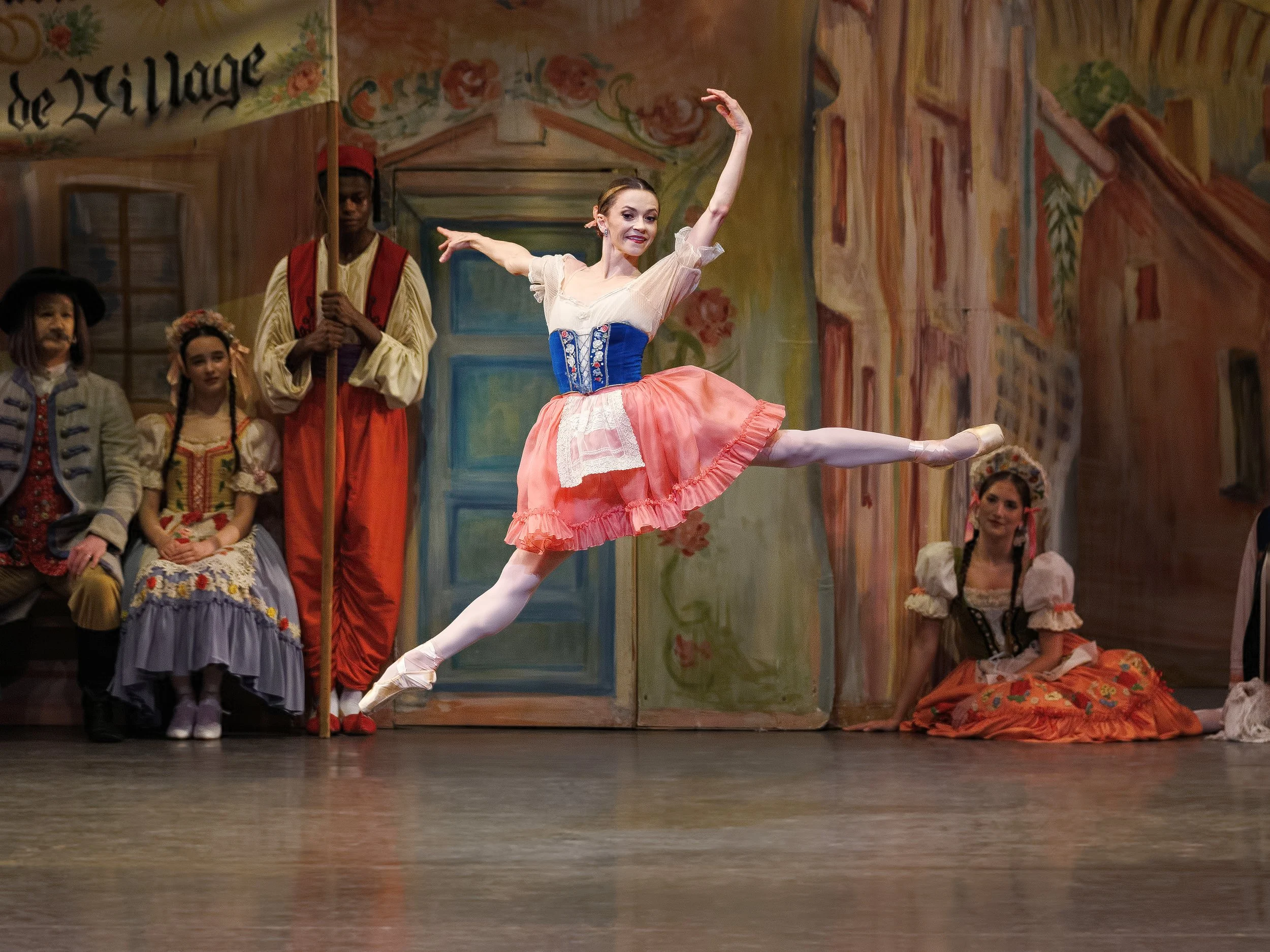
Megan Fairchild in George Balanchine and Alexandra Danilova’s Coppélia. Photo credit: Erin Baiano
This sense of energy and curiosity came into play often, and Fairchild’s often-bubbly demeanor made these moments all the more endearing, such as the way she excitedly set to peering into Coppélius’ workshop, and laughing off the strange noises within. Her scenes with the Doctor carried with a suitably comedic charm as she feigned increasing life in the body of Coppélia, and Fairchild’s articulate gestures did well to convey moments such as when she inquired on the nature of the sleeping man at the table.
With all these qualities, her Act 3 pas de deux was a thing of pure beauty as Fairchild expounded classically-symmetric phrases with grace, precision, and delight, earning a standing ovation in a very special performance.
As Frantz, Joseph Gordon balanced a lighthearted bearing with a dashing physicality, making for a comedic and capable rendition of the flighty villager. After displaying lovely and sensitive partnering through his ballade with the dejected Swanhilda, his casual tossing of the stalk of wheat came across as a humorous rejection of the tradition within the village and the work itself. Gordon’s comedic sense also was on display in moments such as his entry into Coppélius’ workshop, as he slicks his hair and hitches his boots backed by an immense, brassy chords, or his scene with the doctor in the following act as they go from nearly brawling to tossing back wine cups.
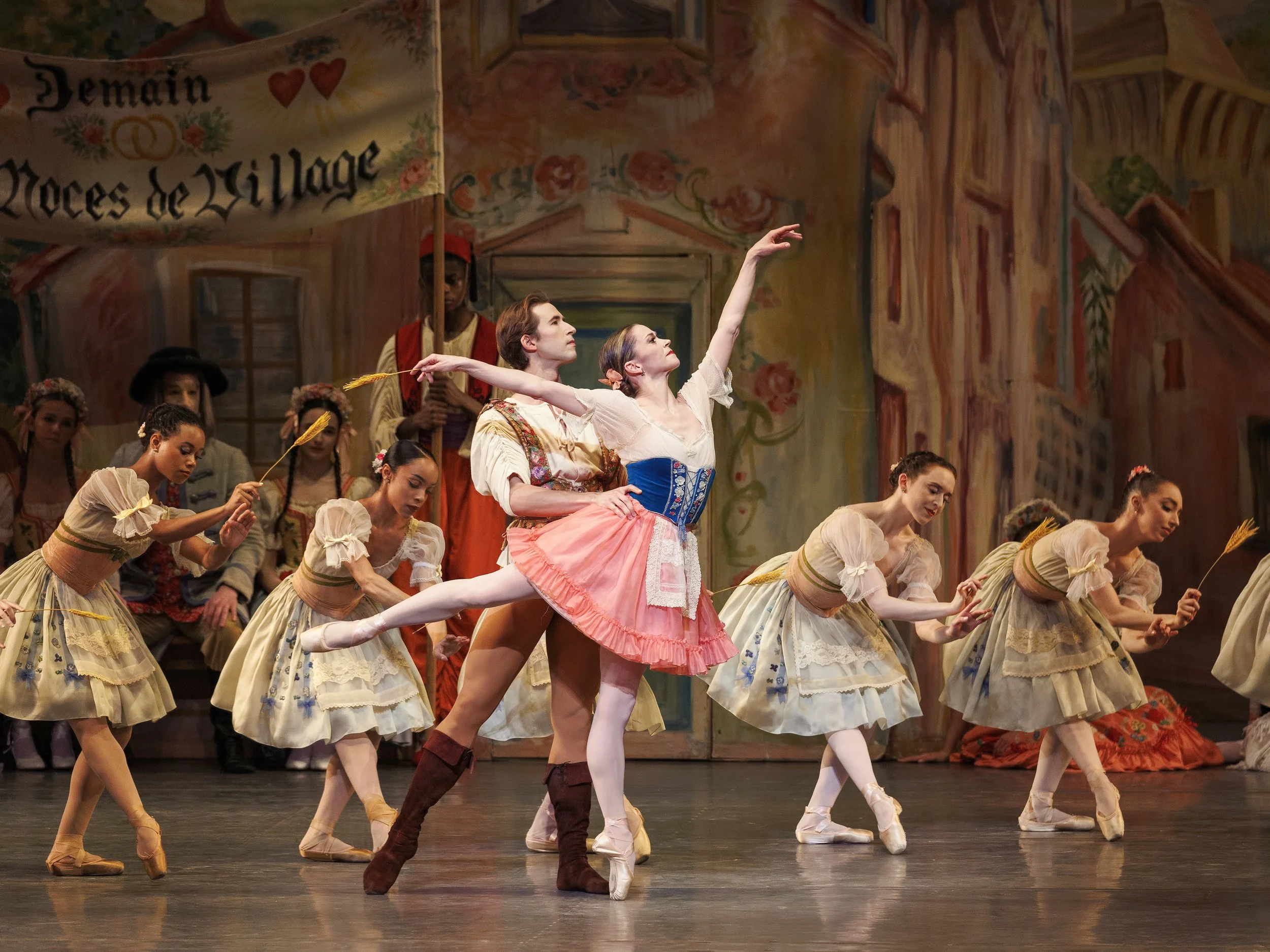
Megan Fairchild and Joseph Gordon in George Balanchine and Alexandra Danilova’s Coppélia. Photo credit: Erin Baiano
A stalwart partner in his moments with Fairchild, Gordon also excelled in his variations, where he let loose with impressive en l’air turns or powerful tours which propelled him about the stage and to tremendous applause.
Lending much comedic and narrative depth, Robert La Fosse brought much of his usual character expertise as Dr. Coppelius. His affection for the doll Coppéllia, initially played by Alston Macgill, was clear from the start and nicely contrasted the brusque nature he displayed with the rest of the villagers, such as the tussle with the drunken men, or the anger he brings down upon Swanhilda’s friends when they’re discovered in his workshop. These qualities really sold his scenes with Fairchild’s Swanhilda, displaying a magnetic sense of wonder and disbelief as his ritual seemed to bring the doll to life, before contrasting it with humorous attempts at lechery as his hands wandered through the ensuing Spanish and Scottish dances.
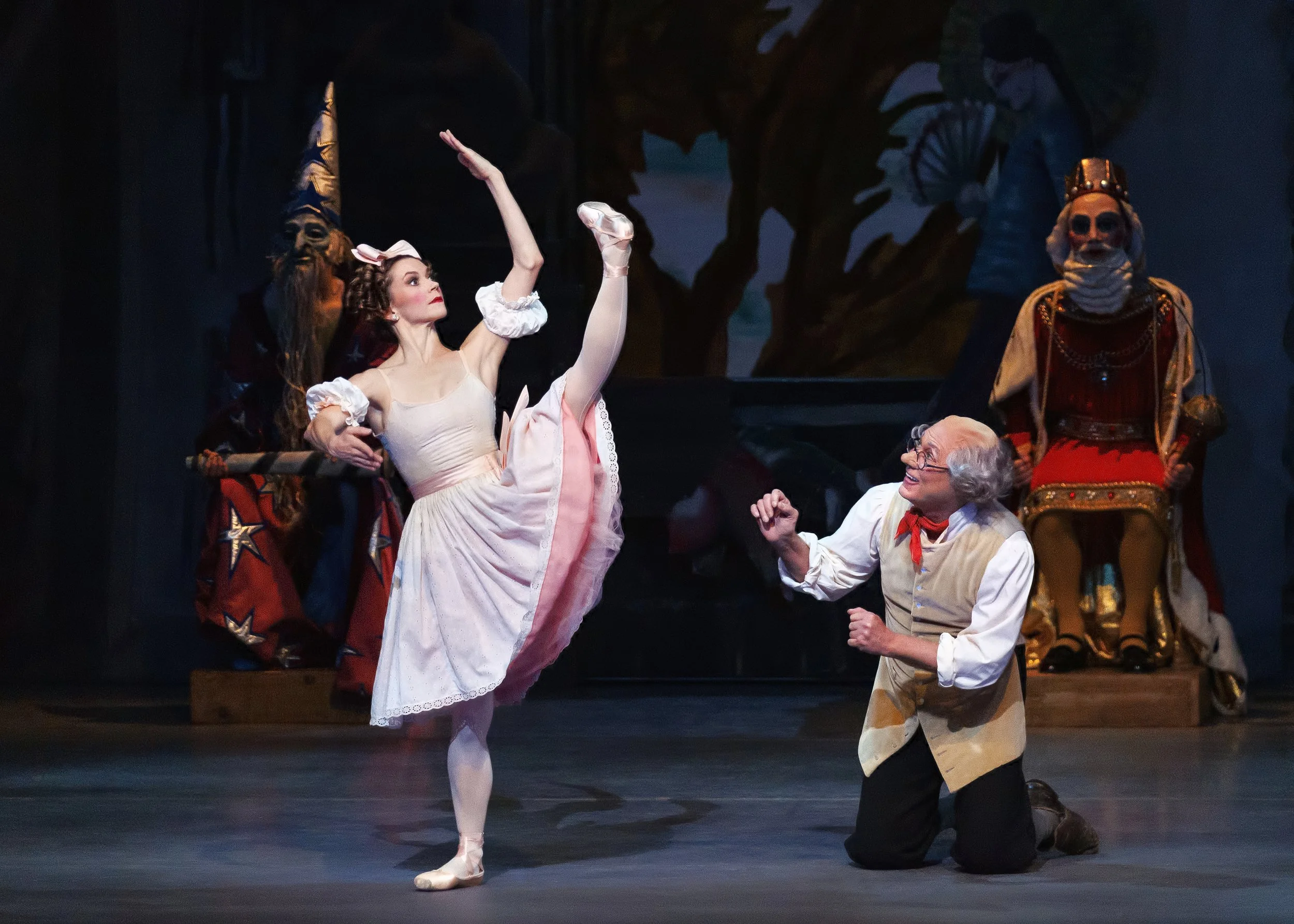
Megan Fairchild and Robert La Fosse in George Balanchine and Alexandra Danilova’s Coppélia. Photo credit: Erin Baiano
The relatively-small size of the main cast in this ballet is rounded out by the impressive variety of numbers for the corps. With passionate mazurkas and czardas in the first act, the audience is presented with a vibrant community for the plot to unfold in, whereas the antics in the workshop during the second act lent much of a fairy tale-esque charm amongst the myriad toys. The result is a ballet that is as cohesive as it is delightful to watch, and Balanchine’s gifts in structuring dances elevates the plot of E.T.A. Hoffmann’s story into something charming and majestic. This came across most powerfully in the ‘Discord and War’ dance that interrupts the wedding festivities with arresting fervor as the corps evoke a stormy episode through their fierce choreography.
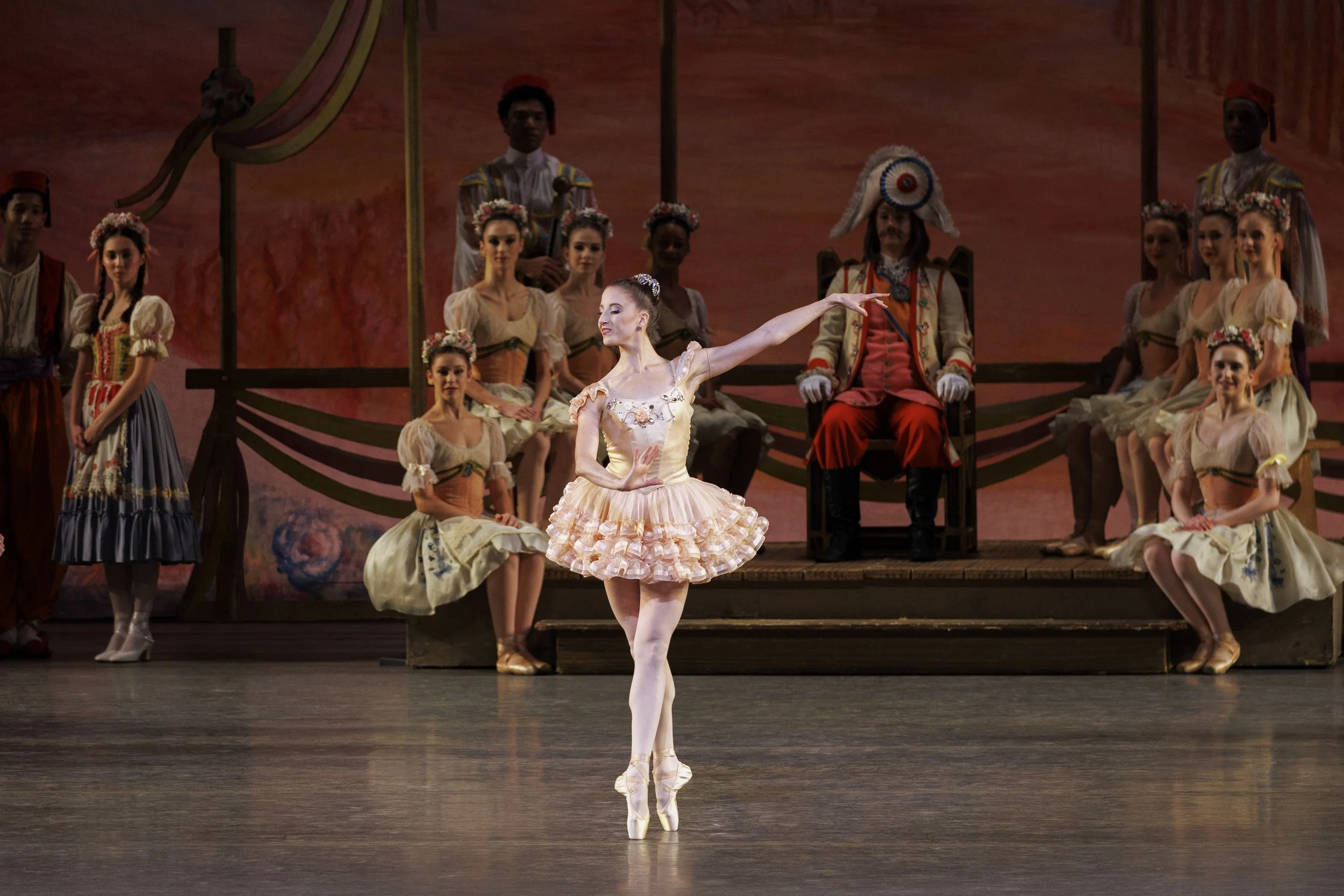
Sara Adams in George Balanchine and Alexandra Danilova’s Coppélia. Photo credit: Erin Baiano
As always, this production dyes the stranger undertones of Hoffman’s story with a charming, pastoral beauty thanks to Rouben Ter-Artunian’s scenery and costumes, where pastel tones and rural pageantry are on full display. It’s clear to see why this staging brings the most out of the ballet, while presenting it in a way which is accessible for all ages.
This performance marked the penultimate show for principal dancer Megan Fairchild, who is set to retire after an exquisite career spanning some 25 years with New York City Ballet. Having performed the role of Swanhilda since her earliest moments with the company, this ballet no doubt holds a special place in Fairchild’s heart, and this enthusiasm as well as expertise translated to nearly every instance of her time onstage.
As New York City Ballet readies to close their spring season, performances like the one this night are the kind audiences will remember for years to come.
-Logan Martell