

Georgian National Ballet at Carnegie Hall
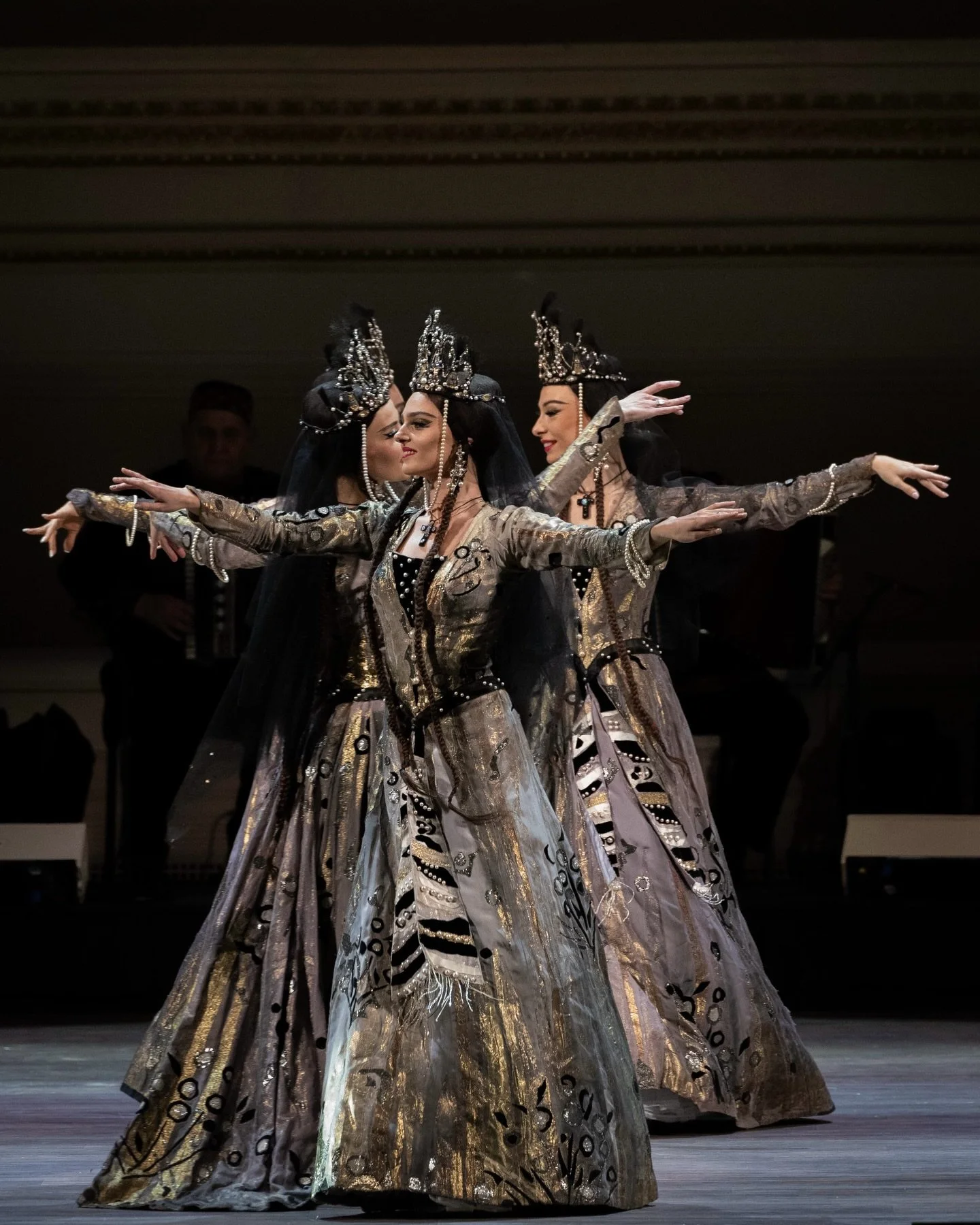
Photo Credit: Eva Kapanadze
On January 17, 2026, the Emolas Corporation presented the Georgian National Ballet Sukhishvili at the Stern/Perelman Stage of Carnegie Hall. This special event saw the renowned company deliver an utterly exhilarating performance which explored the cultural treasures of Georgian folk dance in stunning detail.
First founded in 1945 by Iliko Sukhishvili and Nino Ramishvili, the company has developed itself as Georgia’s leading dance troupe over the decades by coupling the nation’s folk dances with artistry of the highest level. The company is currently led by siblings Iliko Sukhishvili Jr., who serves as artistic director and chief choreographer, and Nino Sukhvilishi, who is general director and costume designer; both have been commended for their work over the years, receiving numerous state and national prizes as they promote Georgian culture.
Opening the program was the ‘Zekari.’ Named for the pass which connects the east and west of Georgia, this piece similarly evoked the bridging of past and present eras through the traditional inspirations which figure into this relatively-modern piece. The accordion and duduk-led texture of the music brought forth great local colors to introduce to the corps of male dancers, their sharp gestures finely matched the energy before the women joined them in refined, elegant lines of contrast.
Following this was the ‘Kartuli,’ a couples dance where the women initiate and lead the dance with mostly gliding steps, while the men closely accompany their motions and yet never touch. The result is a breathtaking display of courtly romance as this duality is constantly brought closer, emphasizing their own qualities and that of their partner, despite the lack of actual contact.
Throughout the night, I was repeatedly impressed with the way the various dances drew from different aspects of Georgian culture. The ensuing ‘Khorumi,’ for example, is a warrior dance hearkening back to ancient times, and saw a truly fitting athleticism as the men’s fierce choreography featured undoubtedly martial touches like posed leaps, rapidly-turning huddles, drops to the ground as if crawling through trenches, and soldiers nimbly vaulting themselves onto the shoulders of their comrades, all backed by a hypnotically-rapid drumline. This energy continued well through the ‘Samani,’ the women’s warrior dance which saw their sequences of high kicks and fluid turns bolstered by the chimes of metal plates and rings from their costumes.
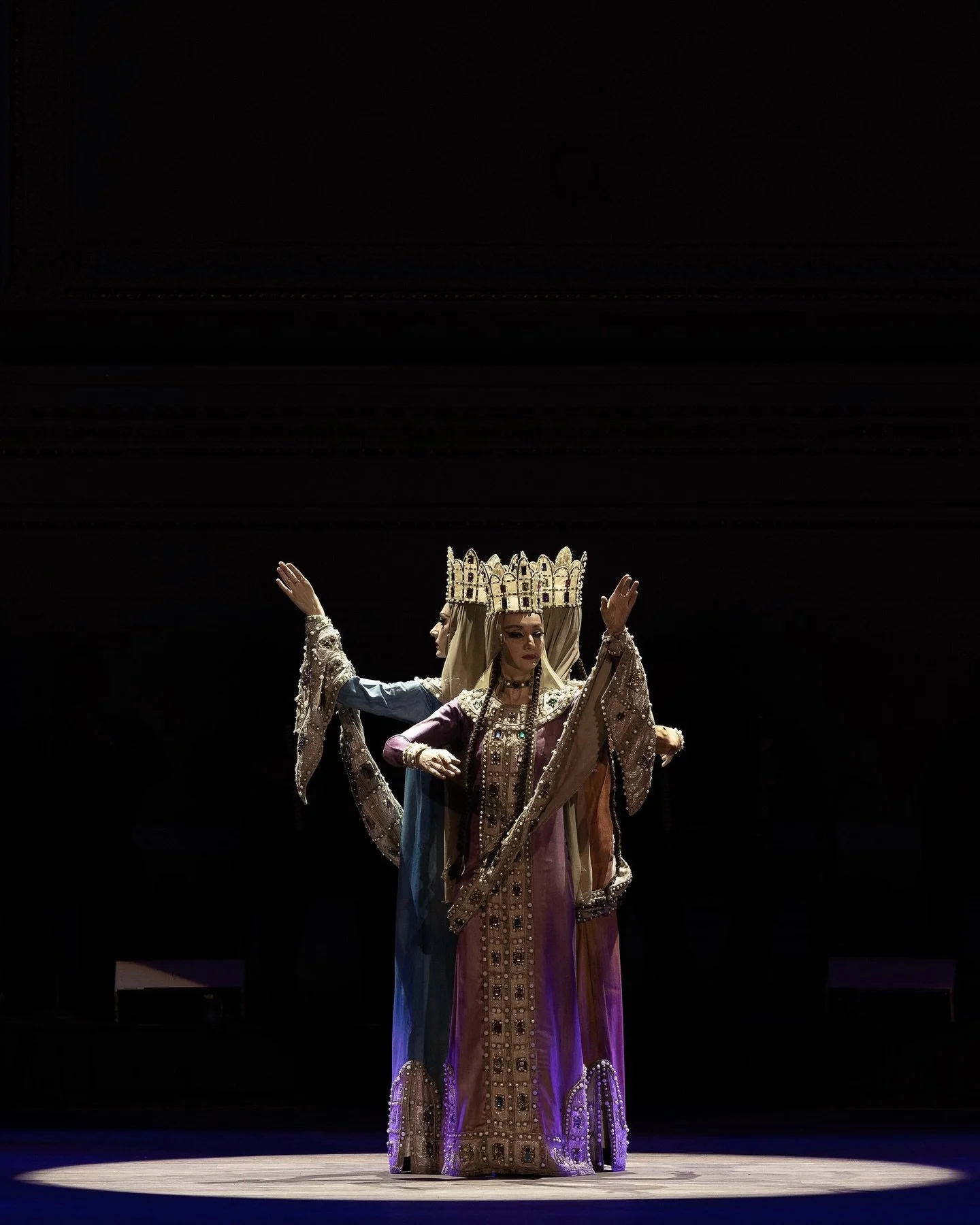
A more regal example came in the later ‘Samaia.’ This highly-elegant number is based on a 12th century depiction of King Temar, and was brought to life with great charm as three female dancers opened with close positioning as if they were a single monarch expressed in a triptych form. Together, they kept a well-controlled unity before slowly breaking apart to give brief solos.
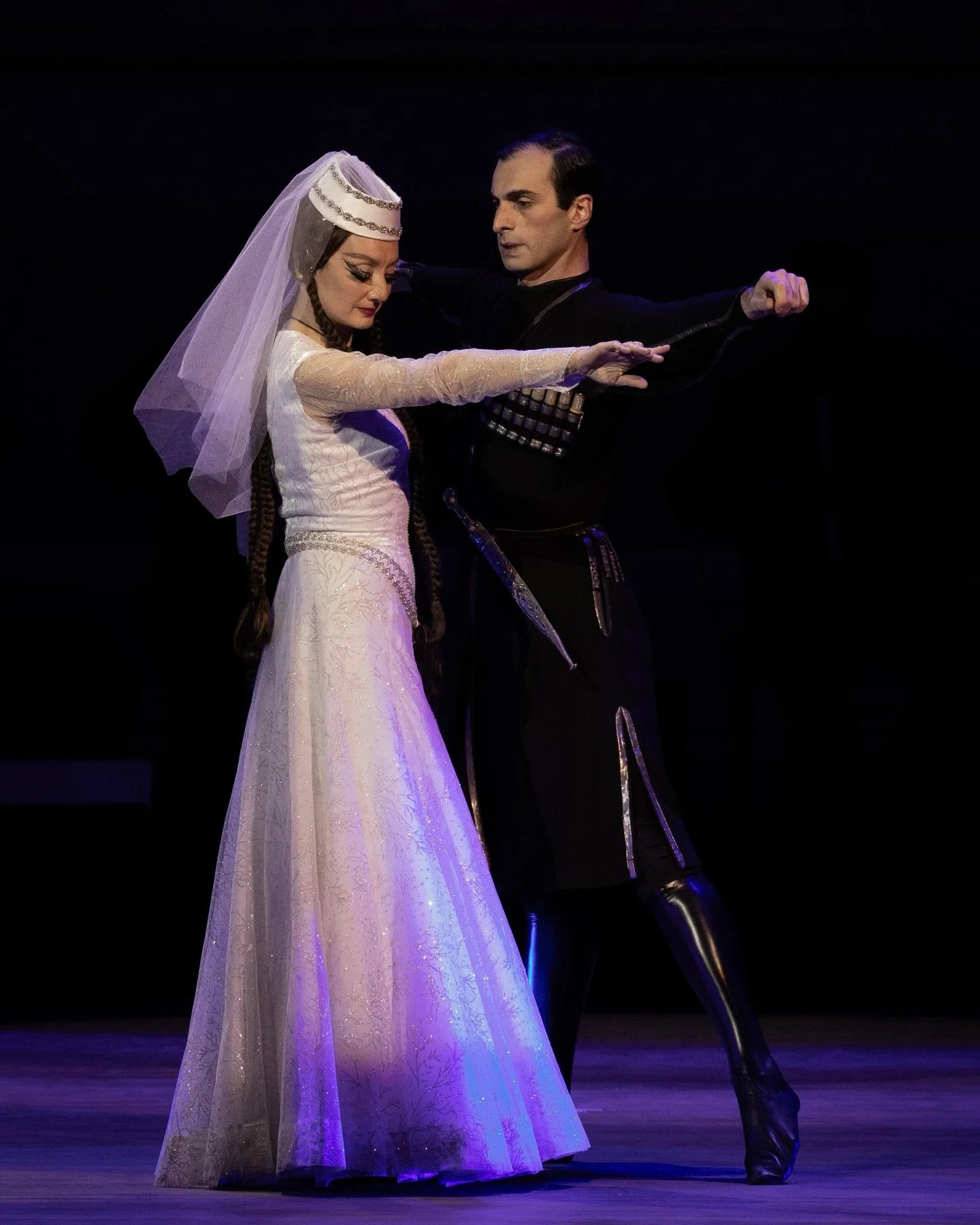
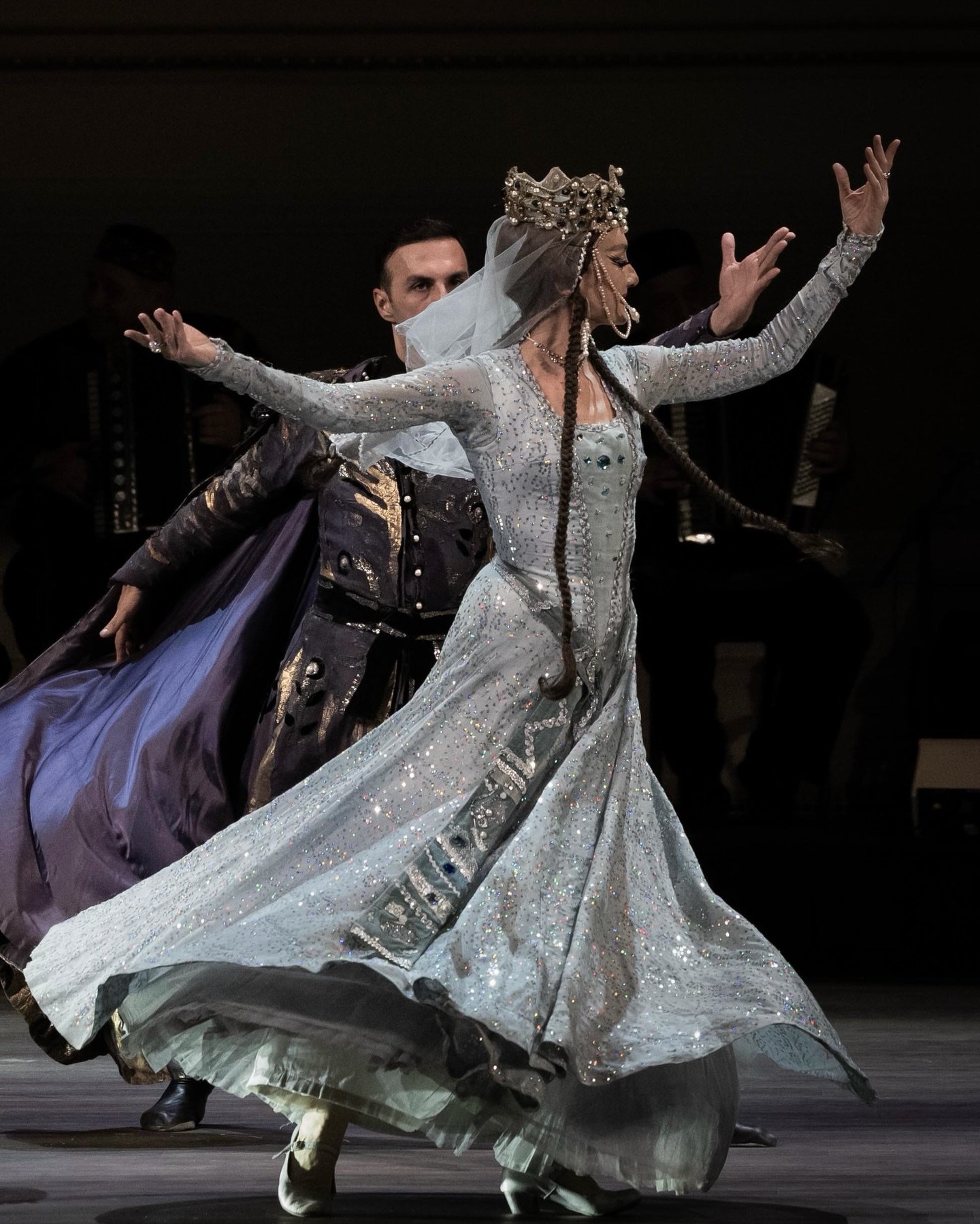
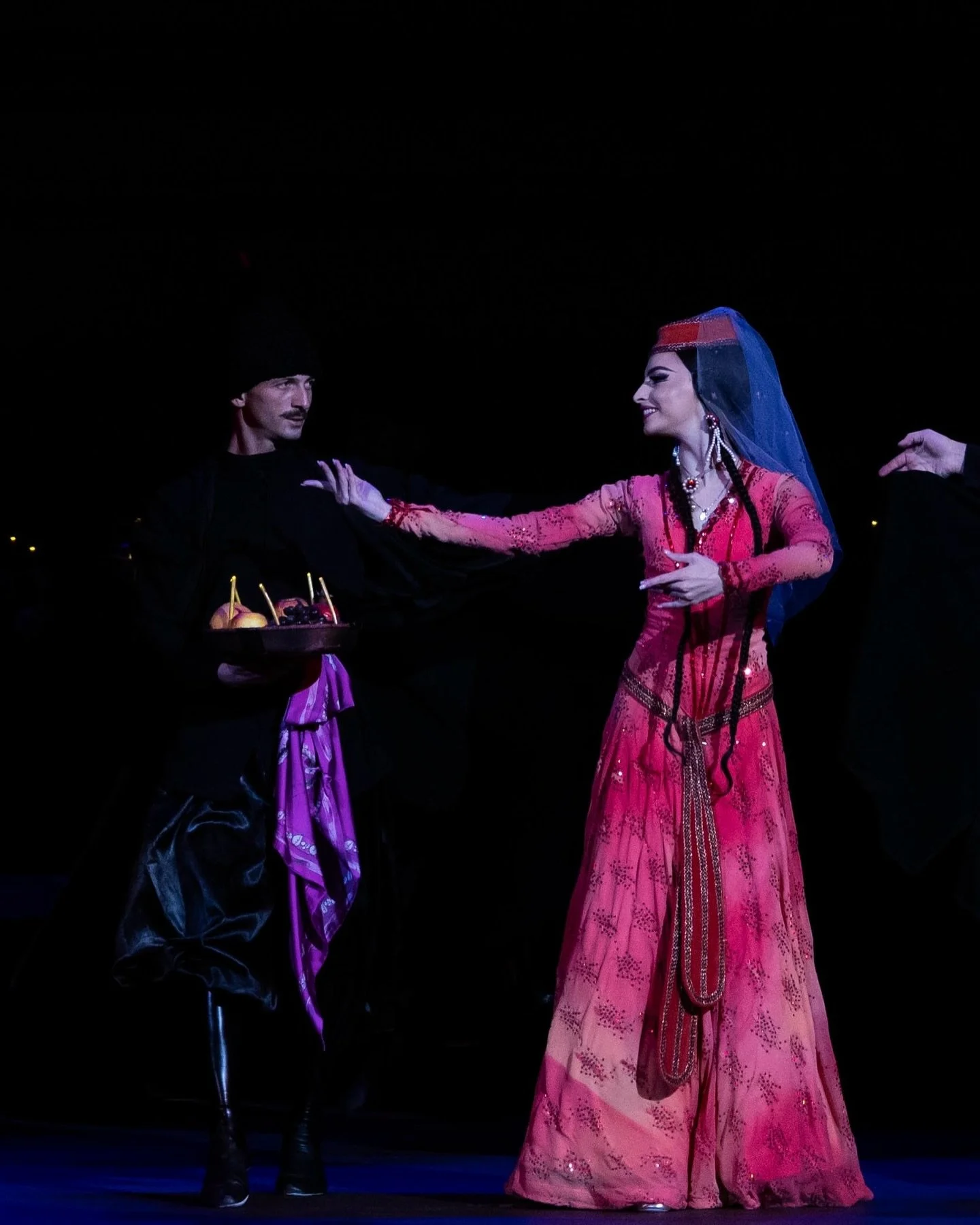
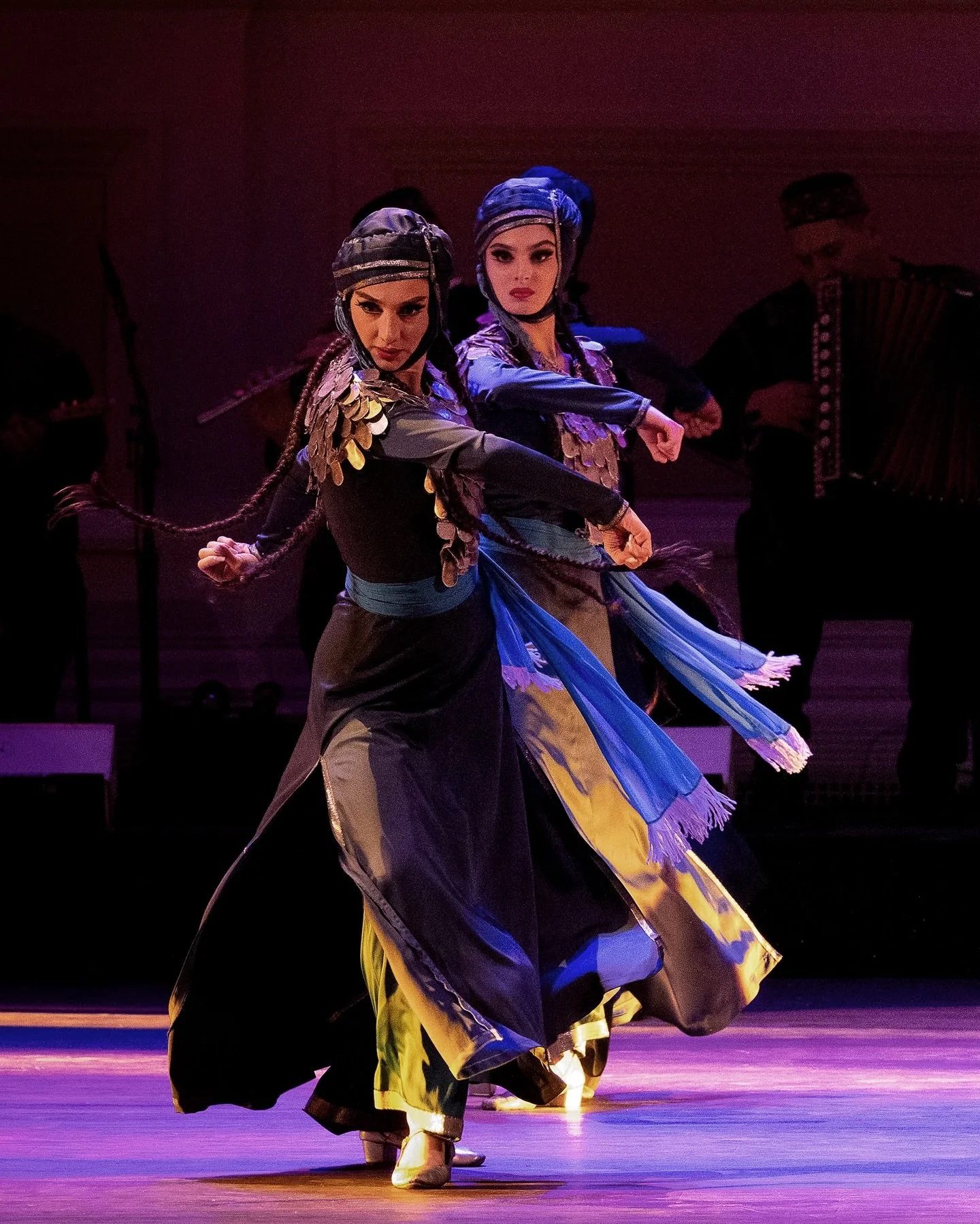
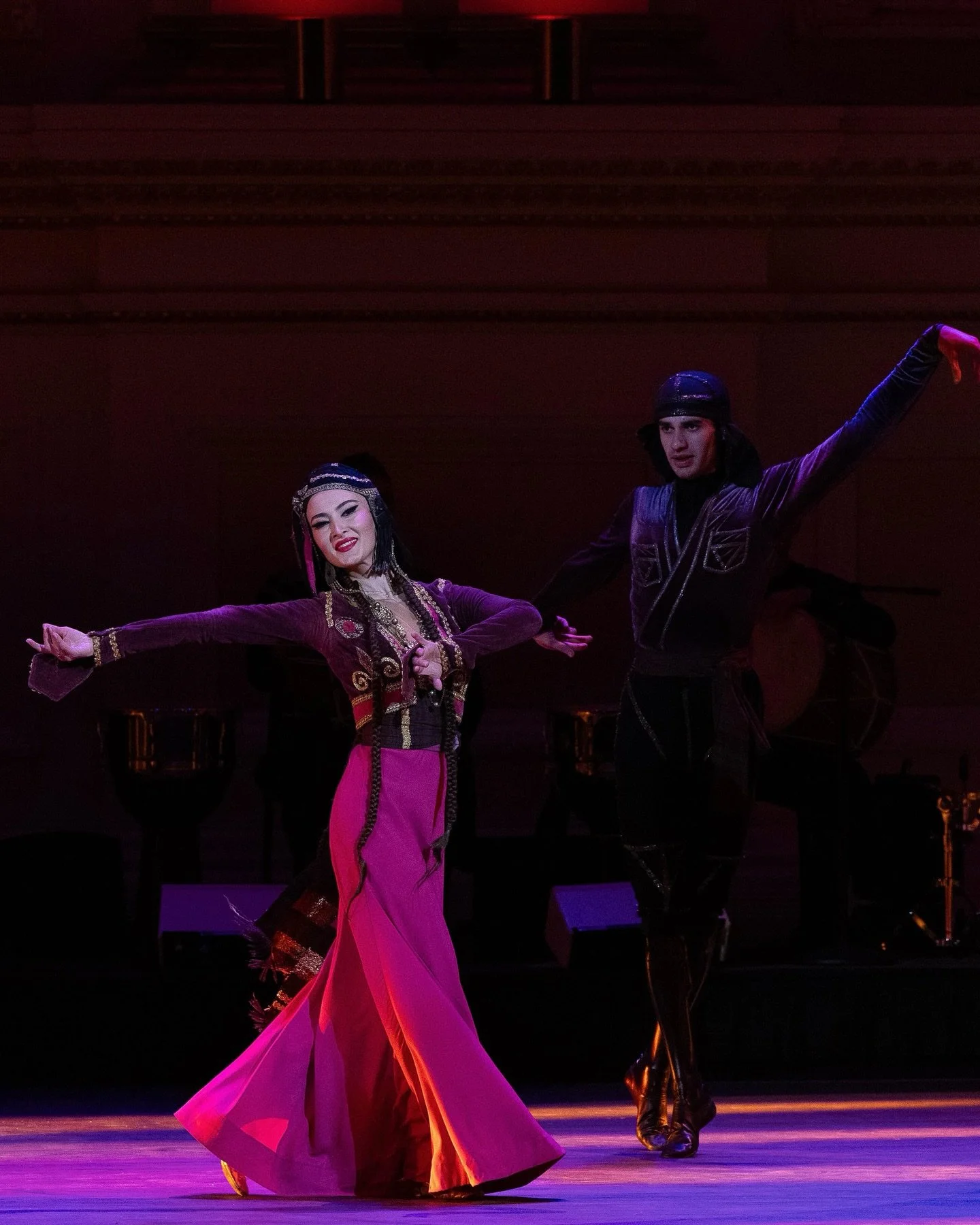
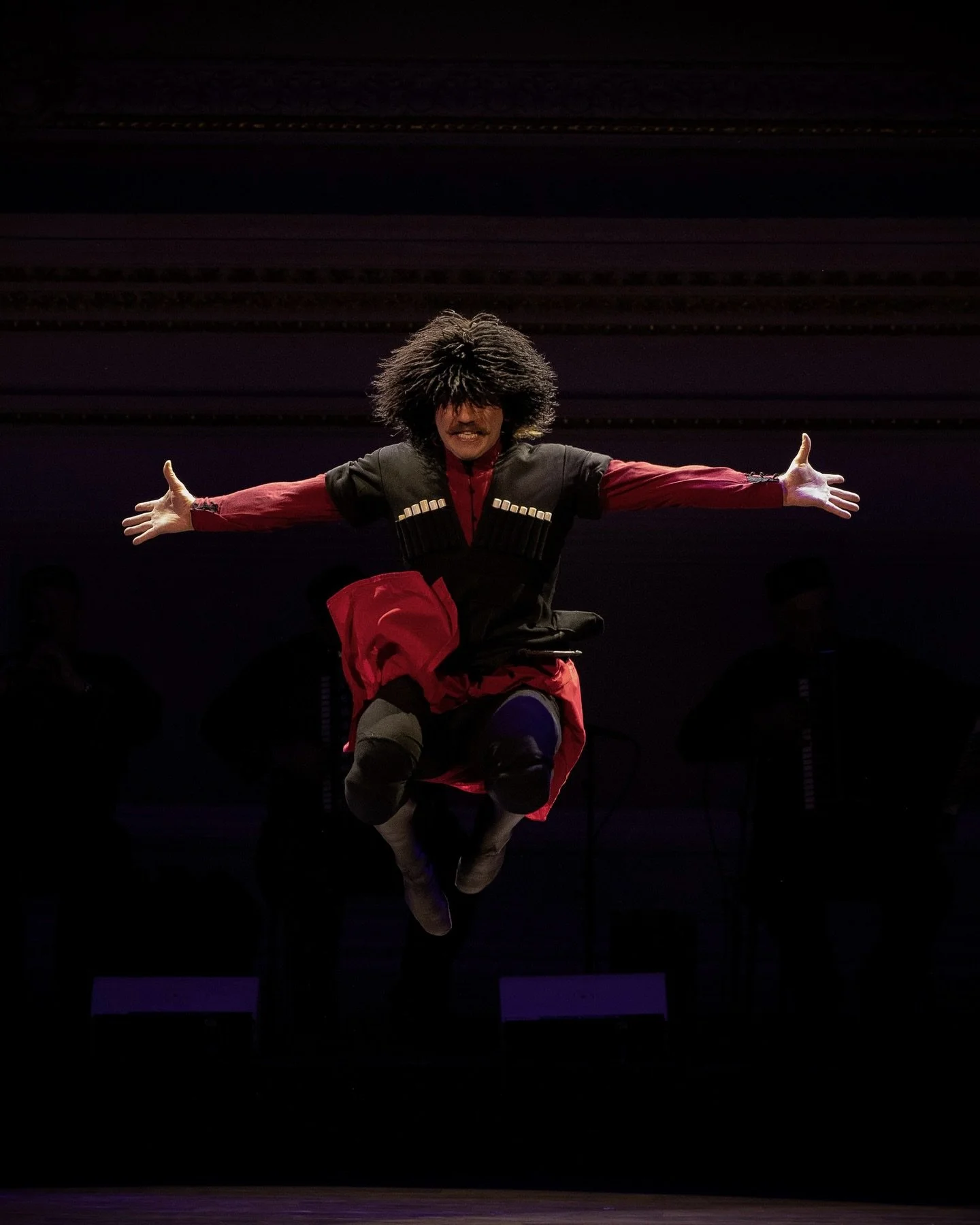
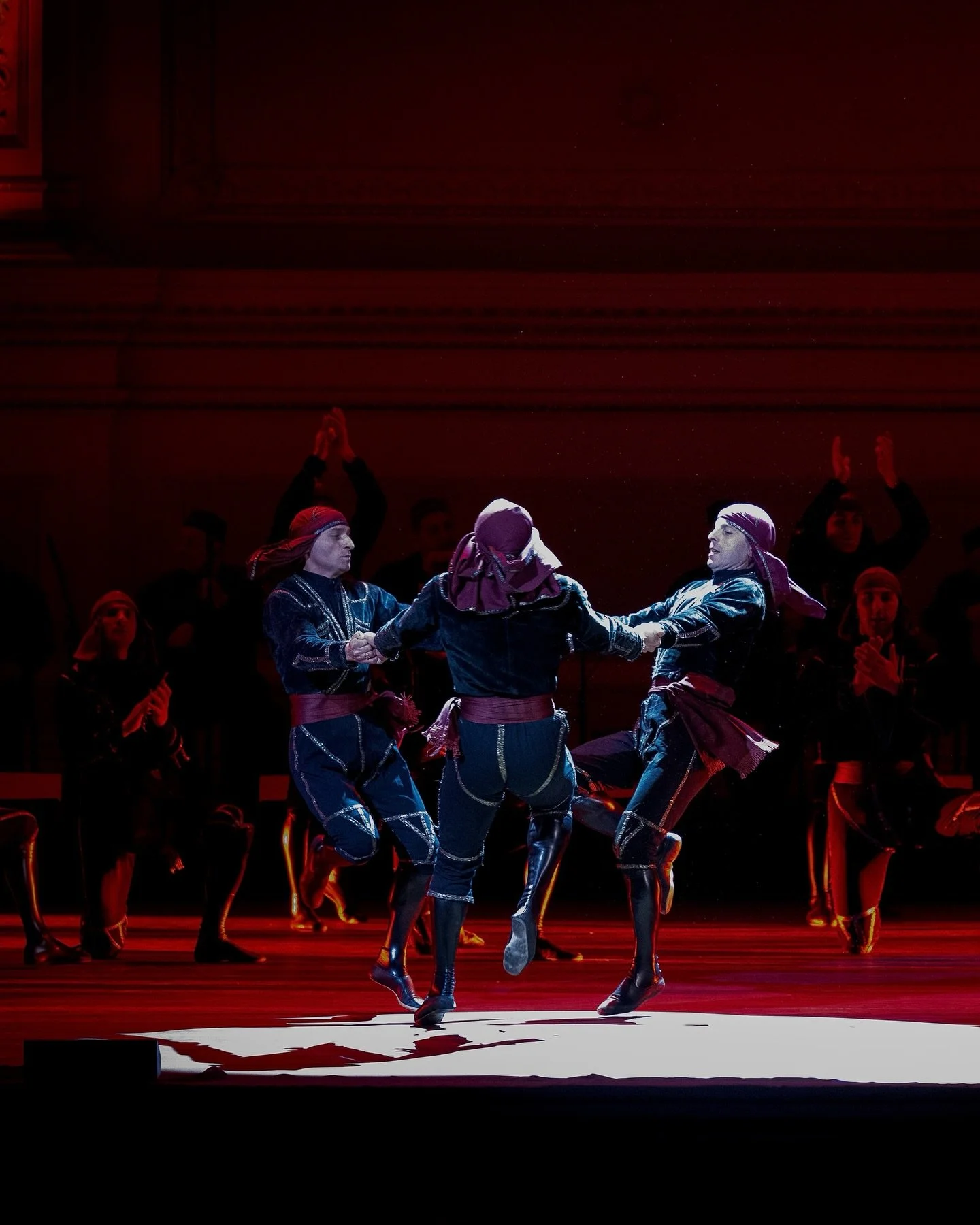
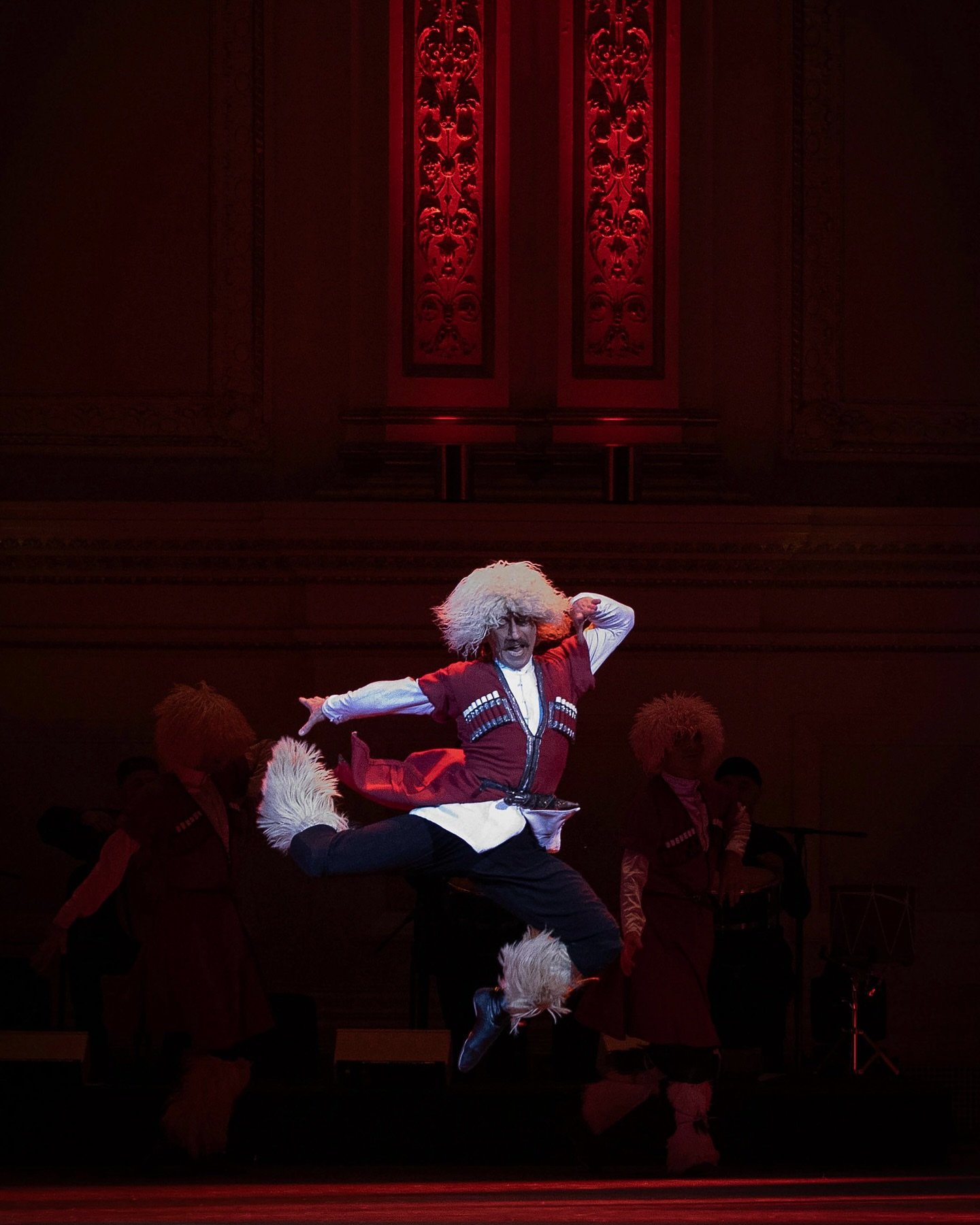
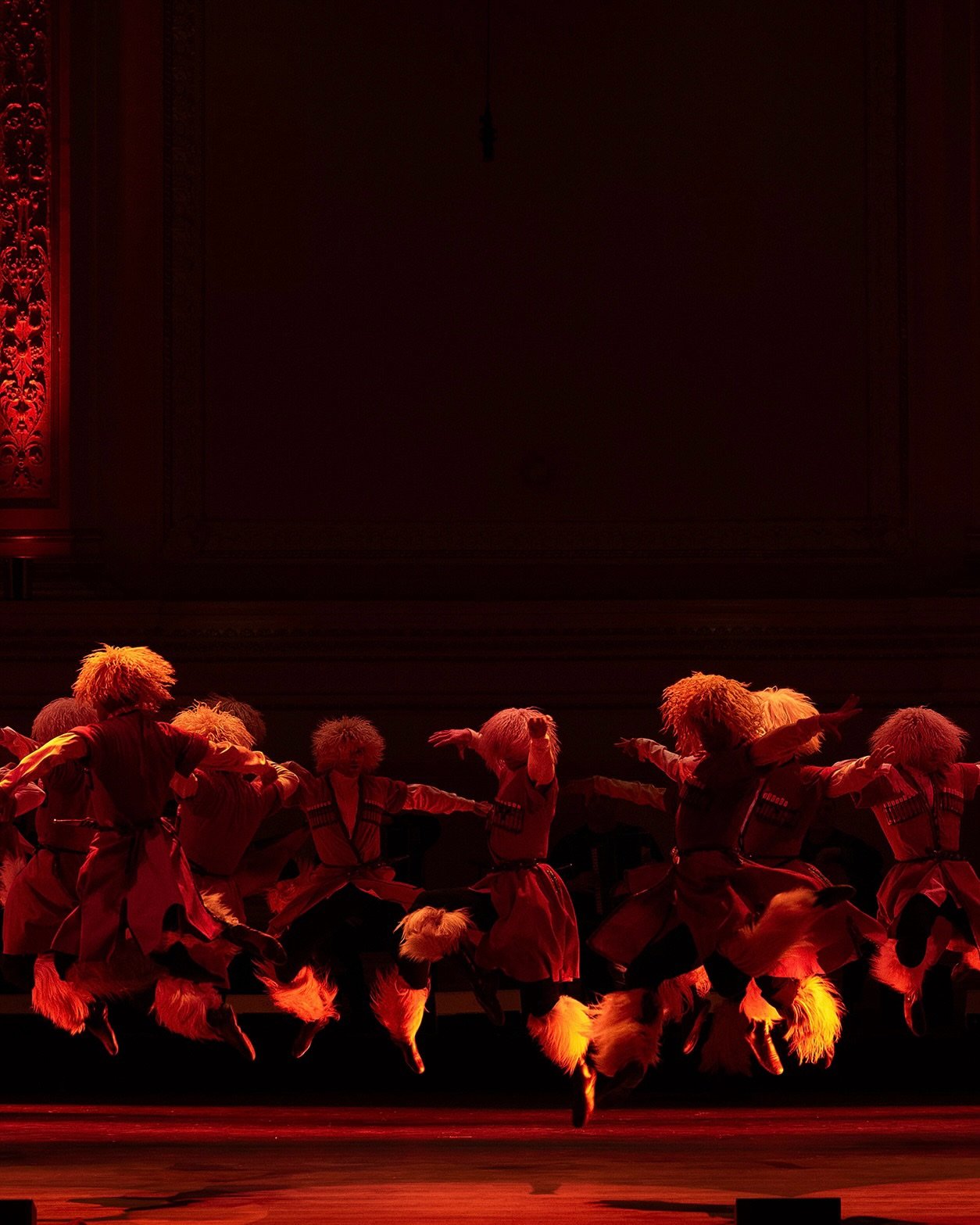
Among the numbers were an assortment of regional dances as well. From ‘Tsdo,’ which characterizes the mountains of Kazbegi through the sheer energy of its drums, through the Black Sea-inspired ‘Lazuri’ where paired men and women exchanged more fluid passages of dance as they passed through the building corps of dancers, and well into the second half with dances like the ‘Nanila’ where the Svaneti lullaby-inspired melody lent a truly mystical feel as the women outlined lyrical phrases until they tapered to an almost doll-like slump to close.
Another moment of great refinement came during the ‘Karachokheli,’ where the darkened stage was graced by the passings of the corps as they carried wreath-like lights to effectively conjure a nice sense of chiaroscuro, before their huddle parted to introduce the female soloist whose floating grace and floral poise of her arms spoke much to the idyllic vision she represented, ultimately disappearing as mysteriously as she entered.
The program was wrapped up with a dizzying gauntlet of dances that were as artistically beautiful as they were physically challenging. I was thoroughly blown away on occasions where the men toured the entire stage while whirling about on their knees, or the sheer bravura of dancers as they delivered a barrage of sharp kicks while advancing towards the audience on the balls of their feet. Performances of this level are truly a thing to behold, and the audience shared in this sentiment as they met the passion of the artists with tremendous applause, all resulting in a show that has to be seen to be believed.
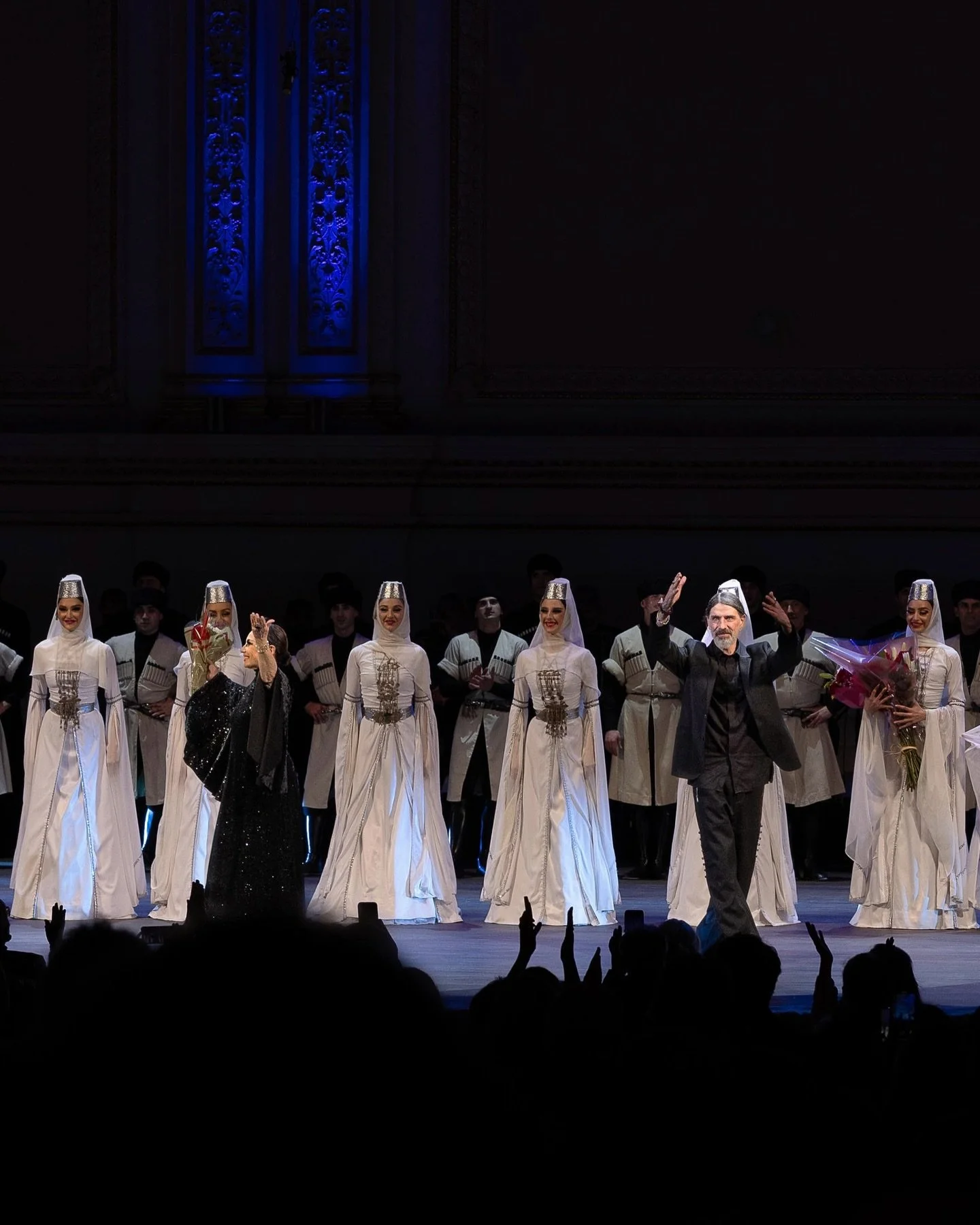
Photo Credit: Eva Kapanadze
-Logan Martell