NYC Ballet 2026: Masters at Work II & New Combinations
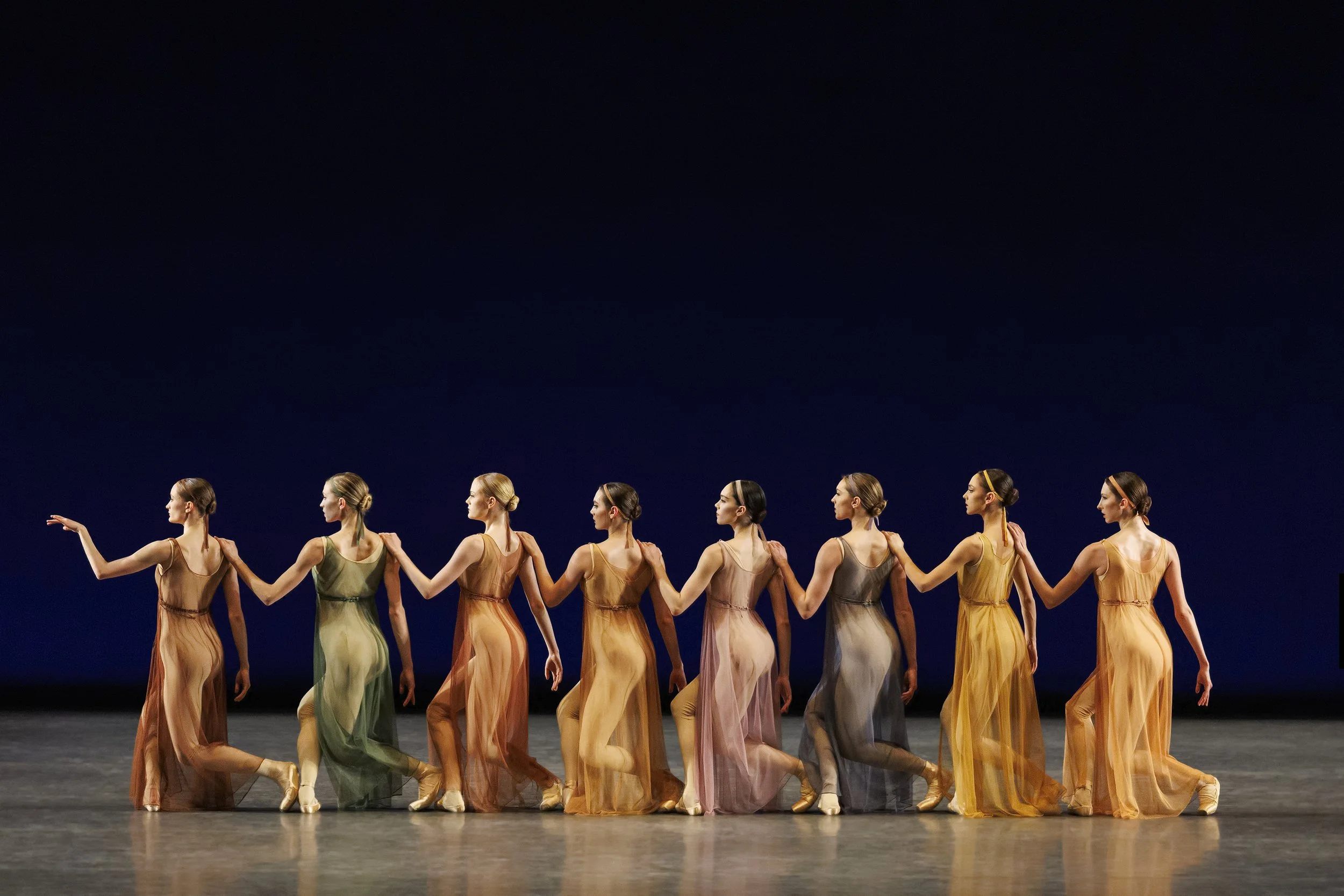
New York City Ballet in Jerome Robbins’ Antique Epigraphs. Photo credit: Erin Baiano
On January 27, 2026, New York City Ballet presented the last of their ‘Masters at Work II’ program. This assortment of interesting works was truly exciting to watch unfold as it ran the course of its varying styles and influences.
Opening the program was ‘Kammermusik No. 2.’ Balanchine’s choreography is set to Paul Hindemith’s piece of the same name, and featured Stephen Gosling as the piano soloist under company conductor Andrew Litton. This number opened briskly as principals Mira Nadon and Emilie Gerrity delivered swift combinations with one trailing a moment behind the other as if echoing all her moves against the constantly-running piano. Their phrases were often met with a response from the men’s ensemble behind them, whose high steps and extended arms did well to frame the various figures they outlined.
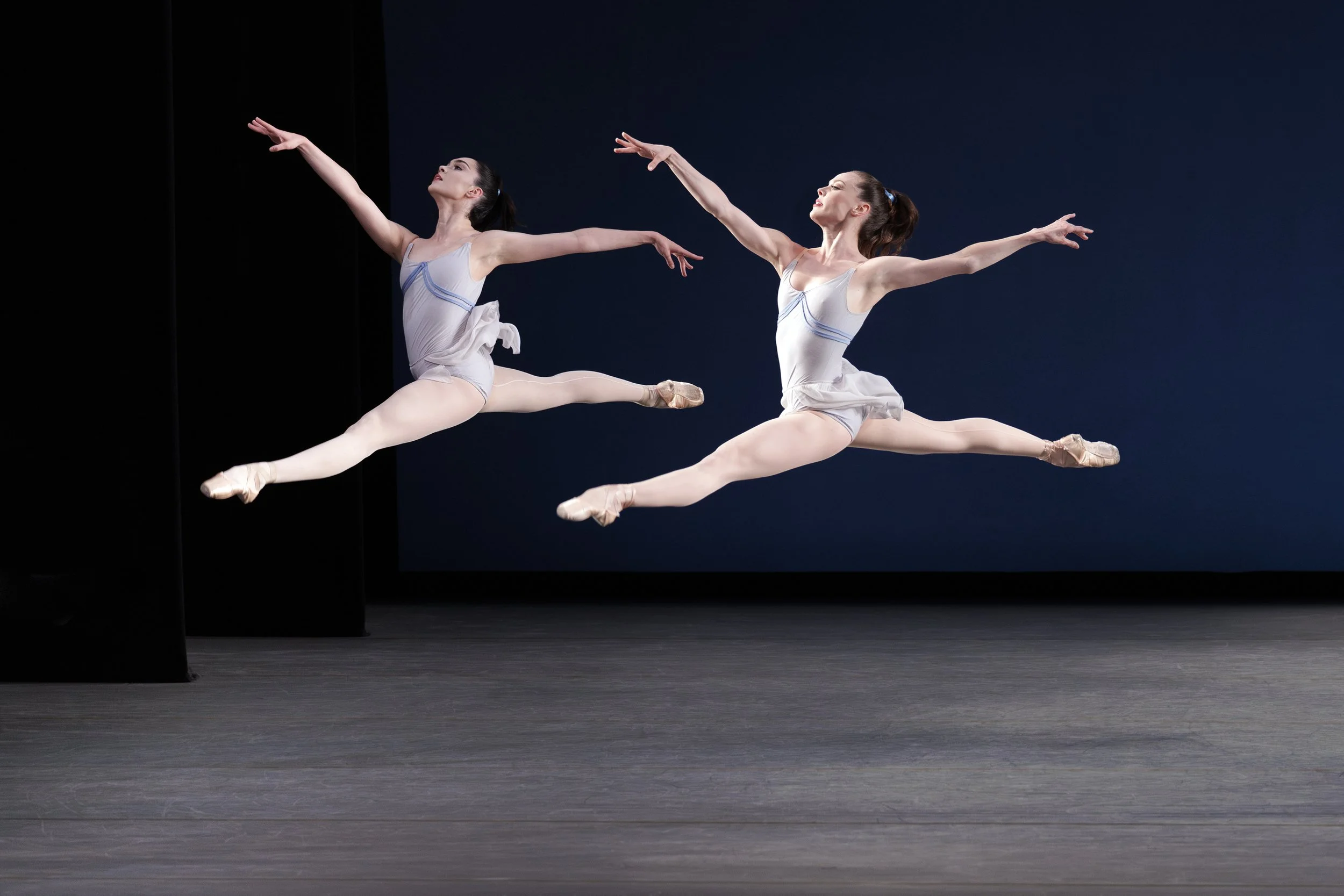
Mira Nadon and Emilie Gerrity in George Balanchine’s Kammermusik No. 2. Photo credit: Erin Baiano
Their sense of unity also opened the ensuing number as they flowed between and under their linked arms. Nadon and Gerrity returned, joined by Ryan Tomash and Chun Wai Chan for some charming, high lifts to enter before delivering sharply-executed supported cartwheels. Between the four soloists and the ensemble, there were some fascinating combinations of solo or partnered passages which provided much to enjoy from this refined yet energetic work.
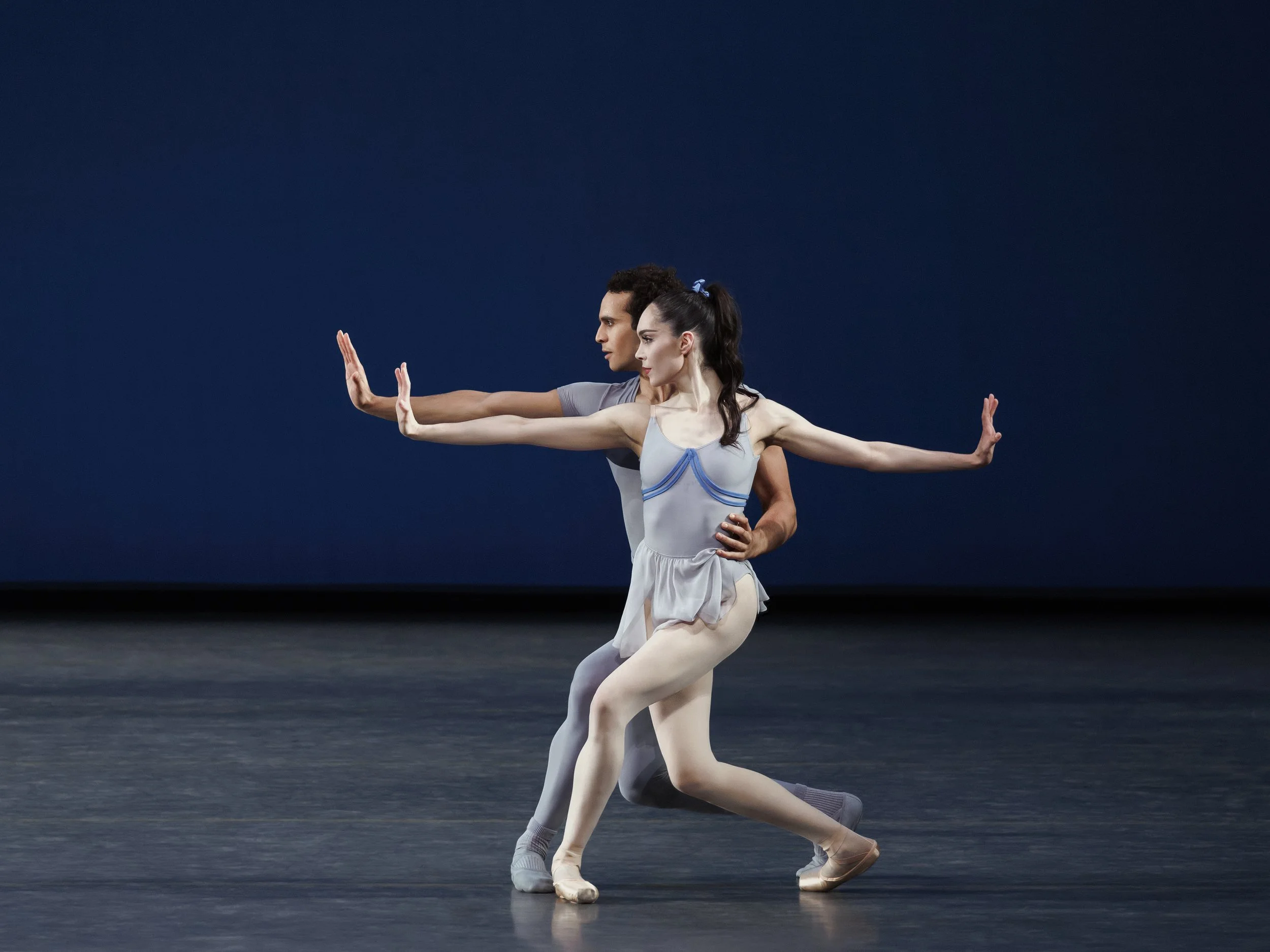
Mira Nadon and Ryan Tomash in George Balanchine’s Kammermusik No. 2. Photo credit: Erin Baiano
Many of these elements were explored further in the following selection of the program, ‘Le Tombeau de Couperin.’ Set to Ravel’s eponymous orchestral suite, Balanchine’s choreography features 16 dancers staged in two quadrilles, resulting in a wide array of interesting formations. While the prior selection’s chamber music atmosphere tended to keep things at a brisk tempo, this work felt more expressive thanks to Ravel’s characteristically romantic style. This felt especially so during the middle ‘Forlane’ section where the rich, melodic ideas found a similar embodiment as the quadrilles flowed in and out of different figures with great precision.
The ensuing ‘Menuet’ section also developed beautifully as the poised, contemplative bearing of the dancers warmed more and more, leading into some high lifts as the music swelled, and a beautiful reverence sequence from the right and left halves. The ending ‘Rigaudon’ saw a return to a more vivacious energy as the dancers displayed brief, partnered phrases before framing the following pairs as they built to a charged finale.
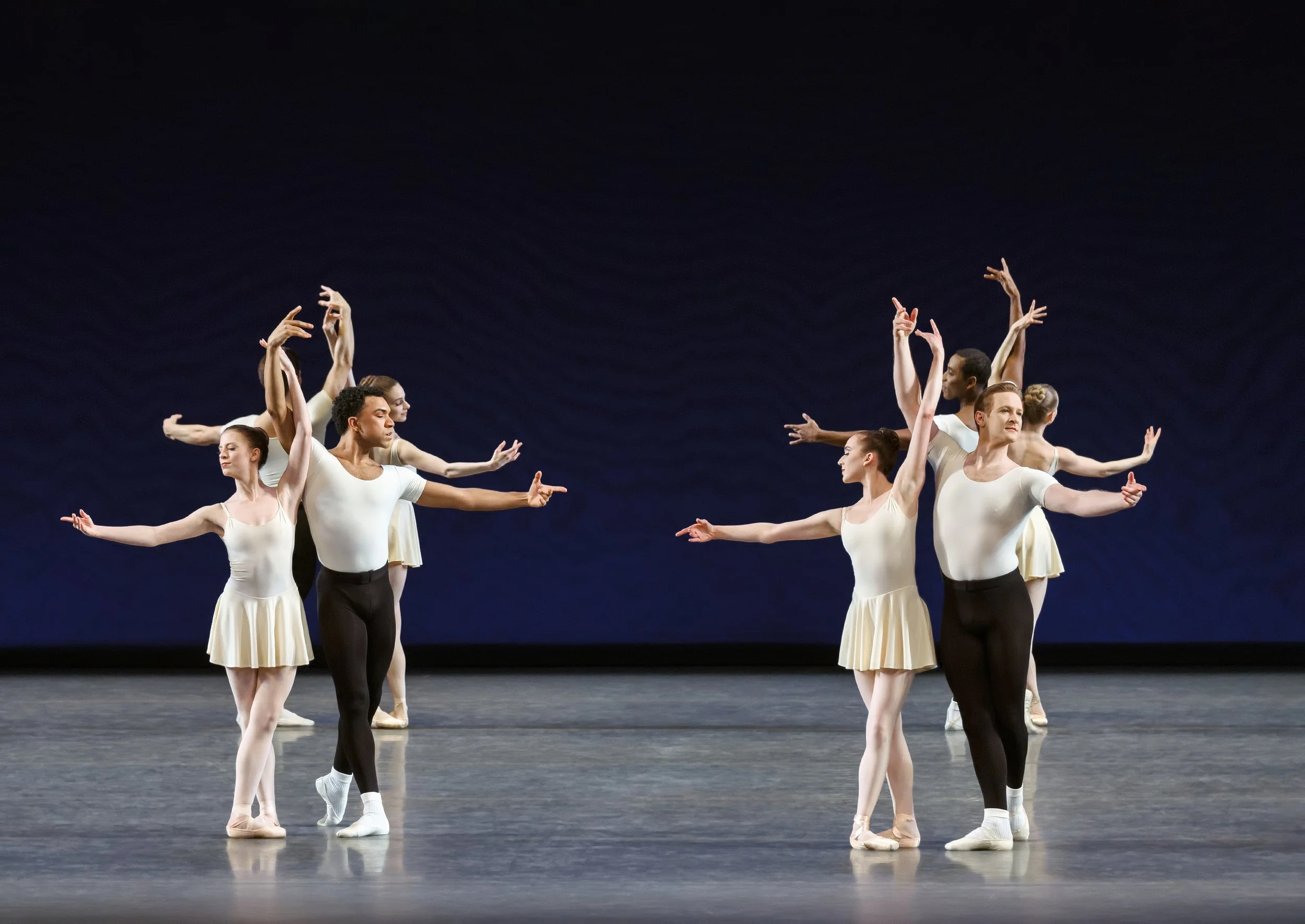
New York City Ballet in George Balanchine’s Le Tombeau de Couperin. Photo credit: Erin Baiano
Third on the bill that night was ‘Antique Epigraphs.’ This piece, choreographed by Jerome Robbins and set to music by Debussy, draws much inspiration from the remnants of Ancient Greek artistry. Featuring only female dancers, this night’s muses were portrayed by Naomi Corti, Miriam Miller, Isabella LaFreniere, Mira Nadon, Christina Clark, Becket Jones, Anna Snellgrove, and Kloe Walker; Scott Kemsley provided the flute solo for Syrinx. This piece carried with a charming mystique as the ladies elaborated a number of poses against the bare yet striking blue background in the style of Grecian urns. While there was a sense of control through much of this work, there was undoubtedly a passion behind the coolness as the dancers often displayed elegant tours, or fluid, retreating pointe to convey a sense of floating just over the stage’s surface.
Last on the evening’s program was ‘Raymonda Variations.’ Opening with the entr’acte, Litton and the orchestra delivered a captivating transition as the slowly-rising chords pivoted into a gentle, pastoral theme before the curtain raised to the variations in proper. This selection featured Megan Fairchild and Anthony Huxley, joined by Meaghan Dutton-O’Hara, Mary Thomas MacKinnon, Grace Scheffel, Kloe Walker, and Mia Williams. Despite the relative lack of a narrative, between the charming costumes and backdrop, there was a much more complete feeling than the almost-conceptual aspects of the prior selections, and the dancing was just as eye-catching.
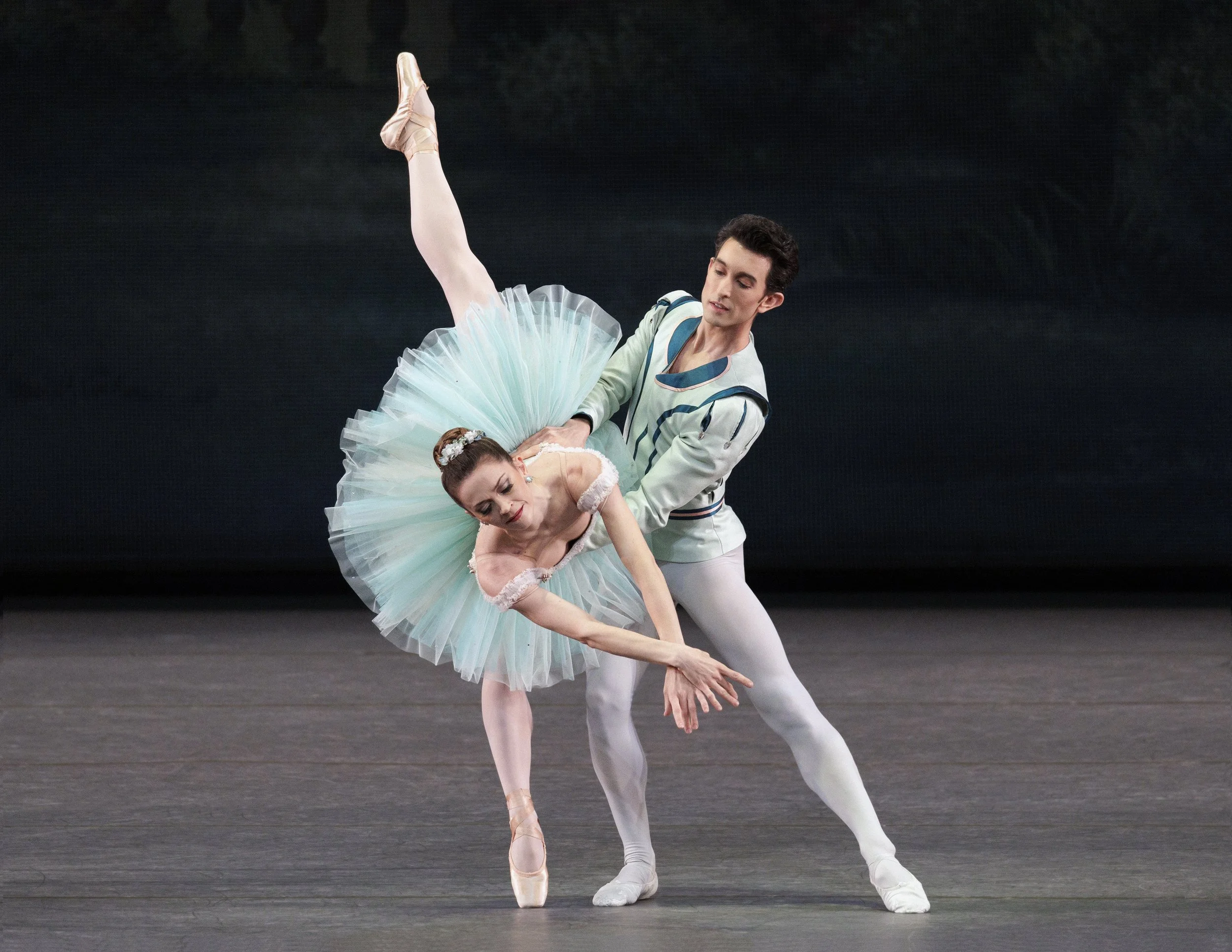
Megan Fairchild and Anthony Huxley in George Balanchine’s Raymonda Variations. Photo credit: Erin Baiano
Principal dancer Anthony Huxley was in excellent form this night as he displayed easy hops and lightly-beating feet in more grounded combinations, as well as pirouettes which tapered with splendid control. Paired with Megan Fairchild, he made a gallant a partner as usual as the two delighted with high lifts, deep cambrés, deftly-caught jetés, and more. Fairchild herself achieved much through her own variations, opening with a contemplative touch which was balanced well by the energy of her developpes, flowing turns, and brisk changements.
The ensemble was similarly endearing as they flowed between trios, lines, and more; often employing lowering port de bras or soft arabesques, these gentler aspects from the women were highlighted all the more by the chimes and loftier textures of their music. The finale was skillfully prepared as the pairs filled the stage and built the energy to reintroduce Fairchild and Huxley, capping off their exuberant pair-work with a caught dive that drew no shortage of applause from the audience.
While there was deliberately little narrative continuity, there was much cohesion and tremendous beauty to be found in the works of Tuesday’s program. From ‘Kammermusik’ which evokes a feeling of almost pure dance, through the Romantic influences of the middle Ravel and Debussy works, to the fuller-staging of ‘Raymonda Variations’ there built a sense of arc which was carried almost entirely by the choreography, and served as testament to the artistic sensibility of the dancers and orchestra.
As New York City Ballet brings the heat this winter, audiences will have much to look forward to as the company gets ready for their upcoming ‘New Combinations’ program and next month’s production of the classic ‘Sleeping Beauty.’
-Logan Martell.