NYC Ballet 2026: The Sleeping Beauty
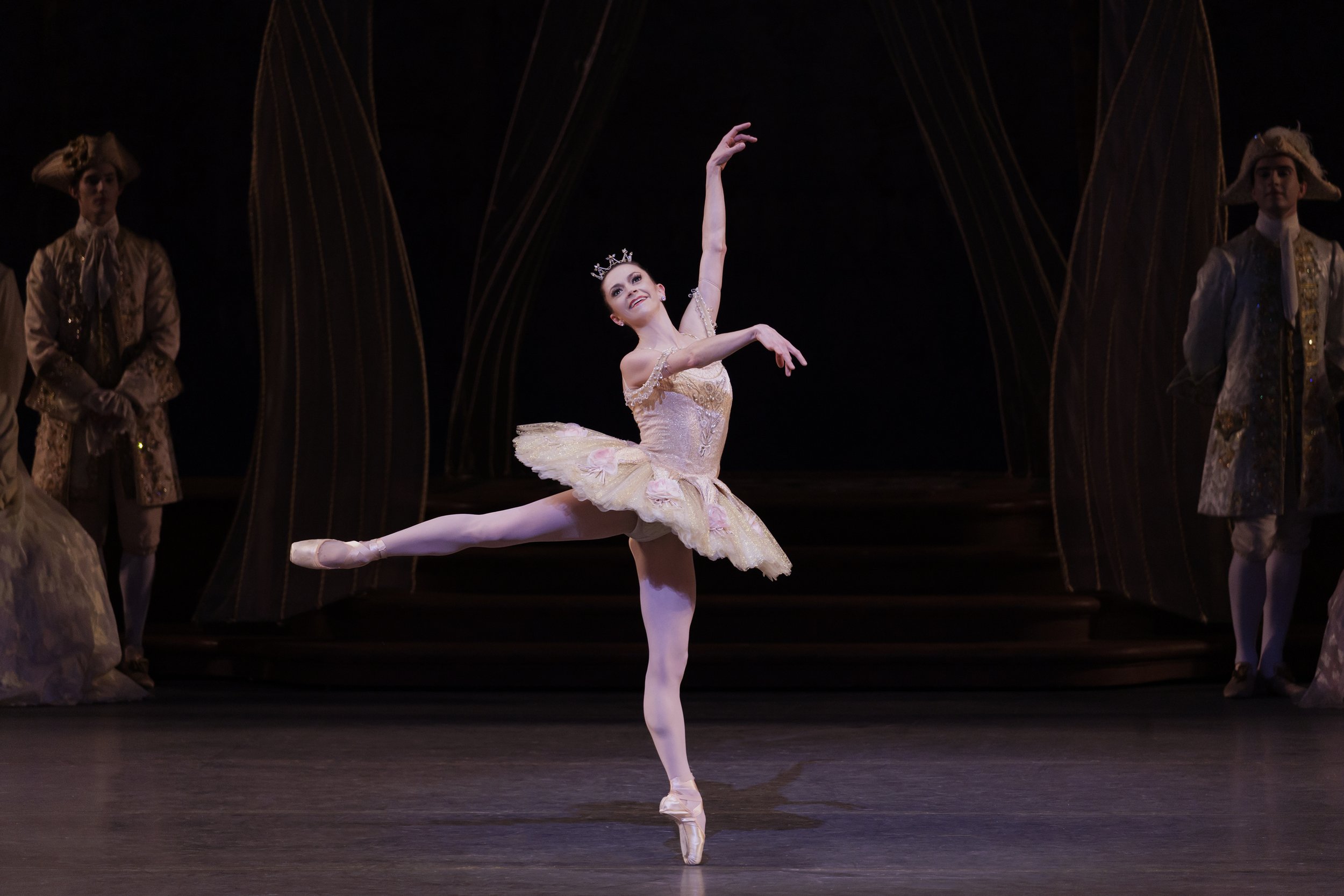
Megan Fairchild in Peter Martins’ The Sleeping Beauty. Photo credit: Erin Baiano
On February 11, 2026, New York City Ballet raised the curtain on their run on Tchaikovsky and Petipa’s ‘The Sleeping Beauty.’ This classic fairy tale was taken to passionate heights by the artists and orchestra, resulting in an utterly enchanting evening of dance.
Leading the orchestra that night was guest conductor David Briskin, who effectively illuminated Tchaikovsky’s score with great technicality and emotional depth. This made iconic moments like the ‘Waltz of the Flowers’ during the village dance all the more impactful over the course of the night.
In the role of Aurora, principal dancer Megan Fairchild demonstrated charming virtuosity which took her interpretation to breathtaking levels. Her bubbly entrance saw her in fine form before she readied for the ‘Rose Adagio’ which saw her pair off with four different suitors in a showcase of both control and energy. This section held much to enjoy, like a captivating, extended promenade sequence where each suitor guided Fairchild through a complete rotation before handing her off to the next one, or a charming, seated lift where Fairchild seemed to wave down blessings and well-wishes to those framed under her.
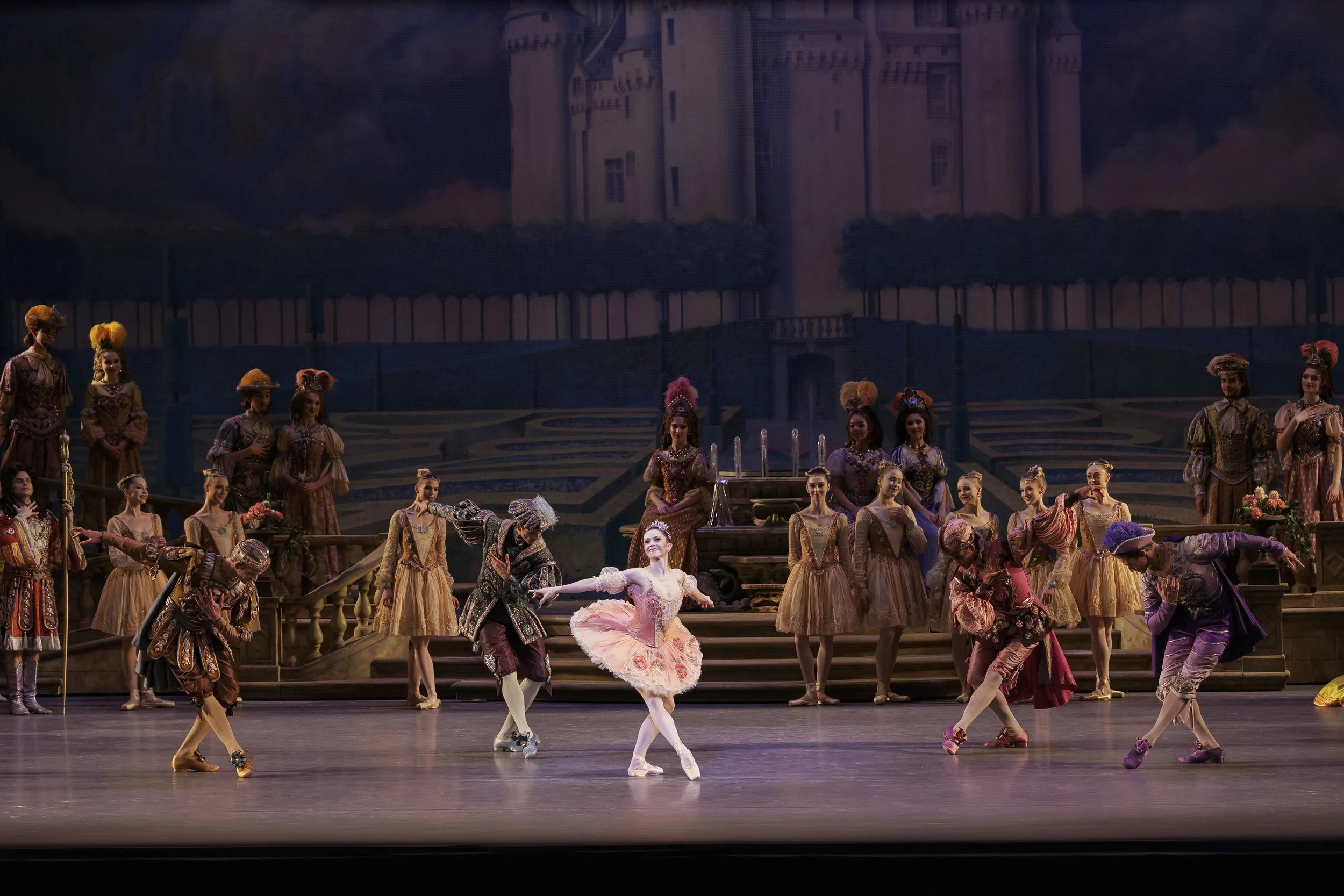
Megan Fairchild in Peter Martins’ The Sleeping Beauty. Photo credit: Erin Baiano
These jubilant qualities were finely contrasted during Aurora’s appearance in the vision which closes out the first half. Here, she took on a suitably ethereal bearing through her choreography as she set Prince Désirés’ heart aflame. The constant sense of chase made their moments of partnered phrases all the more compelling as they flowed on and offstage.
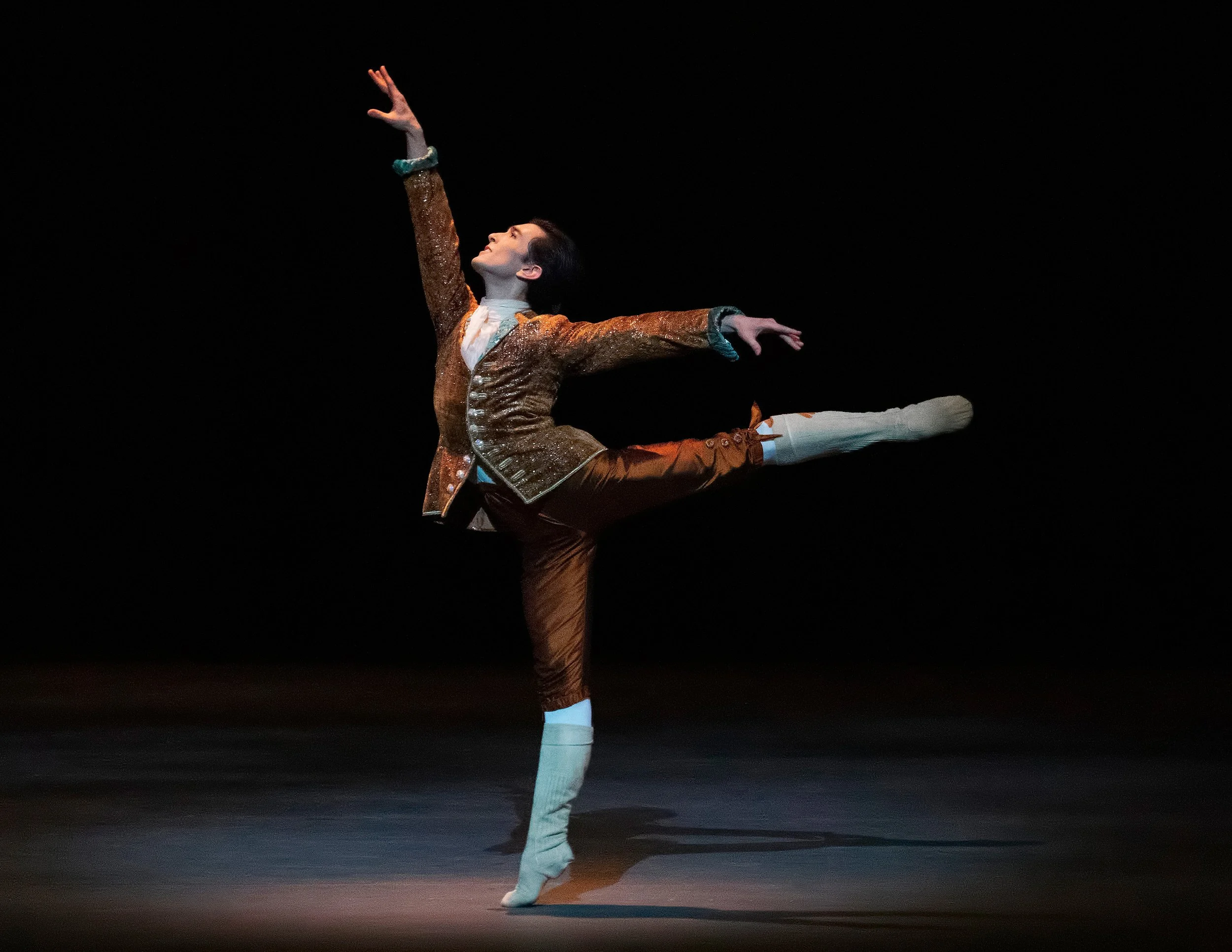
Anthony Huxley in Peter Martins’ The Sleeping Beauty. Photo credit: Erin Baiano
As Prince Désiré, Anthony Huxley made a truly gallant partner for Fairchild while excelling in his solo moments. The pensive weight that pulled him away from his companions during his entrance was soon done away with as the prince fell for the vision of Aurora through the course of the sequence, resulting in some energetic leaps with the kind of bravura normally reserved for the demands of the later variations. Huxley’s dramatic sense also carried well in moments like when he departs on the boat in search of Aurora’s castle, or his charge through the forest of briar to finally undo the curse.
Their time together during the Grand Pas de Deux was a showcase of gorgeous expressivity from the dancers, with the lush, harp-led measures of the score utterly charged with romantic fervor. Huxley and Fairchild’s movements carried with as much attention as there was affection, supported by the lyrical port de bras, and built towards a thrilling series of dives as if he were sweeping her off her feet and into the air. This breathtaking highlight was not the end of course, as their ensuing variations brought the dynamics with overwhelming athleticism and artistry.
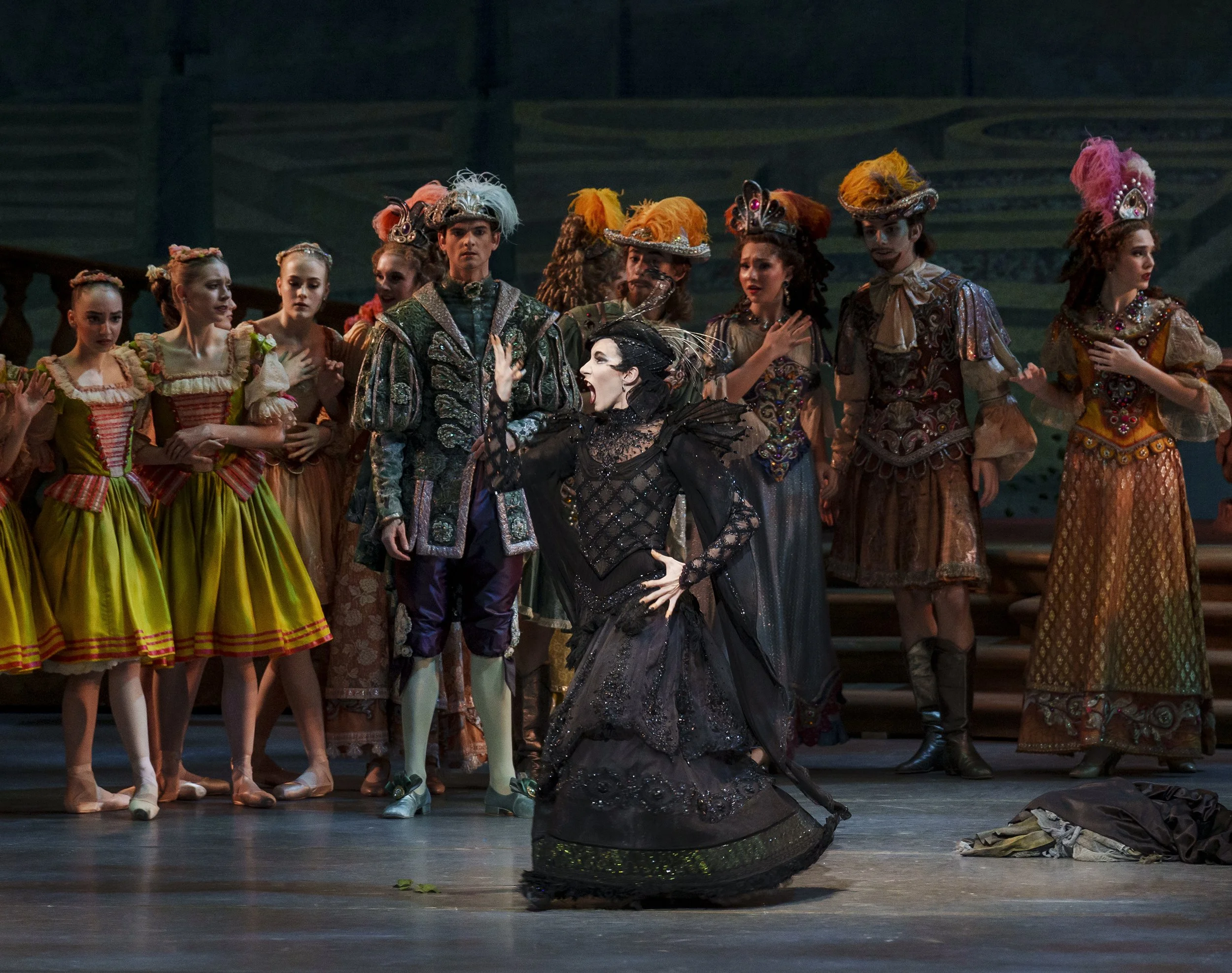
Ashley Hod in Peter Martins’ The Sleeping Beauty. Photo credit: Paul Kolnik
As Carabosse, Ashley Hod effectively seized the essence of the evil fairy through her malicious demeanor and haughty, sneering energy which gleefully threw her scenes into a dark tumult. From her carriage-drawn entrance to her brief mimologue where she curses the infant Aurora, Hod quickly and strongly established the character. Her nearly-impervious façade was nice to watch clash against the calm of the Lilac Fairy, as the former seemed to try re-wresting control of the spell from the latter before being gently repelled.
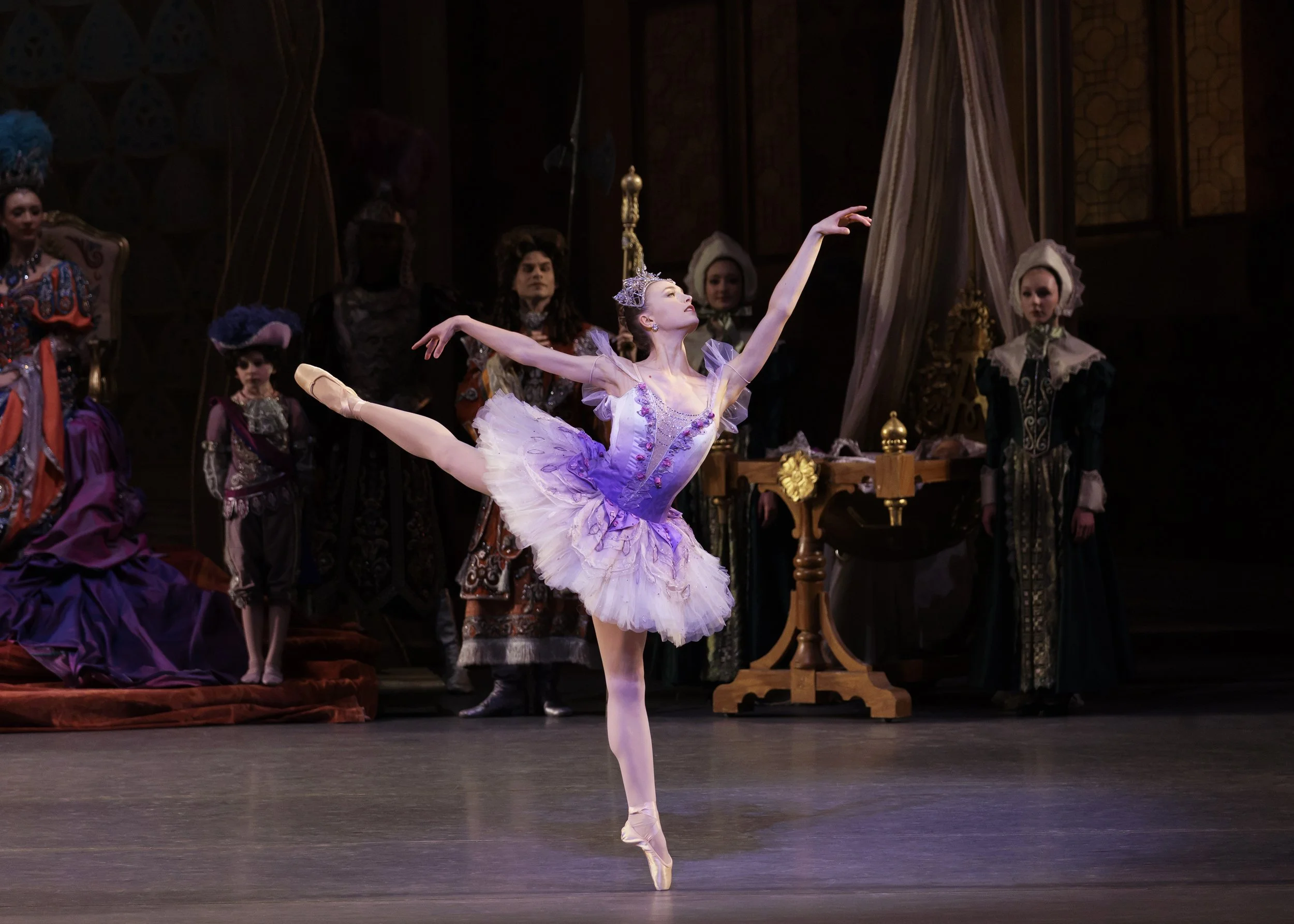
Miriam Miller in Peter Martins’ The Sleeping Beauty. Photo credit: Erin Baiano
In the role of the Lilac Fairy, Miriam Miller brought a soft yet imperious air which lent much to her time onstage. After softening the blow of Carabosse’s curse, we’re later treated to her appearance during the vision, where she guided Huxley’s prince with articulate gestures. A nice touch came in the way Miller softly spun into his path as he attempted to seize the vision of Aurora, as if trying to keep him on the true path to the princess. Whether serving as the guardian angel of the Prince and Princess, or heading up the ensemble of magical characters, Miller’s interpretation was as endearing as it was graceful.
The corps de ballet were a frequent source of fascinating moments through the various dances. The ‘Garland Dance’ in Act 1 saw some refreshing passages as the dense ensemble engaged in easy, swaying steps, deep bends, and lavish, circling figures; their wreaths at moments served as miniature arches or as ribbons to connect the dancers while creating various floral arrangements. The nymphs of the vision sequence took things to ethereal heights as their flowing lines either framed or hid the princess beautifully during the instances of chase.
In addition, there were a number of smaller roles which powerfully bolstered the fairy tale aspects of the work. An early example of this magic was set by the Fairies of Tenderness, Vivacity, Generosity, Eloquence, and Courage, respectively played by Kloe Walker, Allegra Inch, Meaghan Dutton-O’Hara, Mia Williams, and Ruby Lister. Each fairy held a distinct personality well-expressed by their respective dancer which added up to a glimmering assortment of styles to illuminate the prologue. The character roles of King Florestan and The Queen, played by Noah McAuslin and Christina Clark, also served well to flesh out the drama as the curse made the once-gracious couple struggle against the forces set against them. McAuslin and Clark were often articulate in gesture and well-conveyed the sentiments of the fearful parents.
The divertissements of the last act were opened with an opulent touch through ‘The Jewels,’ with Gold, Diamond, Emerald, and Ruby performed by David Gabriel, India Bradley, Olivia MacKinnon, and Alexa Maxwell, respectively. Their measures varied between solo moments or different combinations of partnering, resulting in a beautiful and nuanced set of numbers.
There were also no shortage of cute moments like The Cat and Puss and Boots, played by Claire von Enck and Davide Riccardo, which featured suitably prowling movements, humorous nips at each other, and deceptively-easy lifts while maintaining catty mannerisms. A playful fright was found with Little Red Riding Hood and The Wolf, played by Amelia Kelley and Lars Nelson, as the wolf huffed, knocked over trees, and fought to ultimately carry his next meal offstage.
This section also showcased Sara Adams and Daniel Ulbricht as Princess Florine and her cavalier, The Bluebird. Their pas de deux carried energetically along the heights of the winds of the orchestra, and evoked a sense of floating through things like the way Adams’ working leg seemed to flow while in promenade. These qualities built excellently through penché combinations which spun softly, or deft, seated lifts as Ulbricht bore her aloft. Their number capped off with a stunning catch which brought the sense of flying to its very highest that night.
This production was made all the more immersive due to its set and costumes, by David Mitchell and Patricia Zipprodt, which made scenes and transitory moments alike feel like a storybook come to life. From the shifting backdrop to convey approaching or withdrawing from the castle, constellations turning to show the passage of time, or the spread of the vines and thorns which envelop the kingdom as its put to sleep, there were frequent and very effective touches of magic which carried through the work.
Nearly every facet of this work was gorgeous to behold, and its execution was nearly-flawless all around. Performances like this make it clear why ‘The Sleeping Beauty’ has endured the way it has over the years, bearing a perennial sense of enchantment for all ages.
-Logan Martell.