NYC Ballet 2026: Jewels
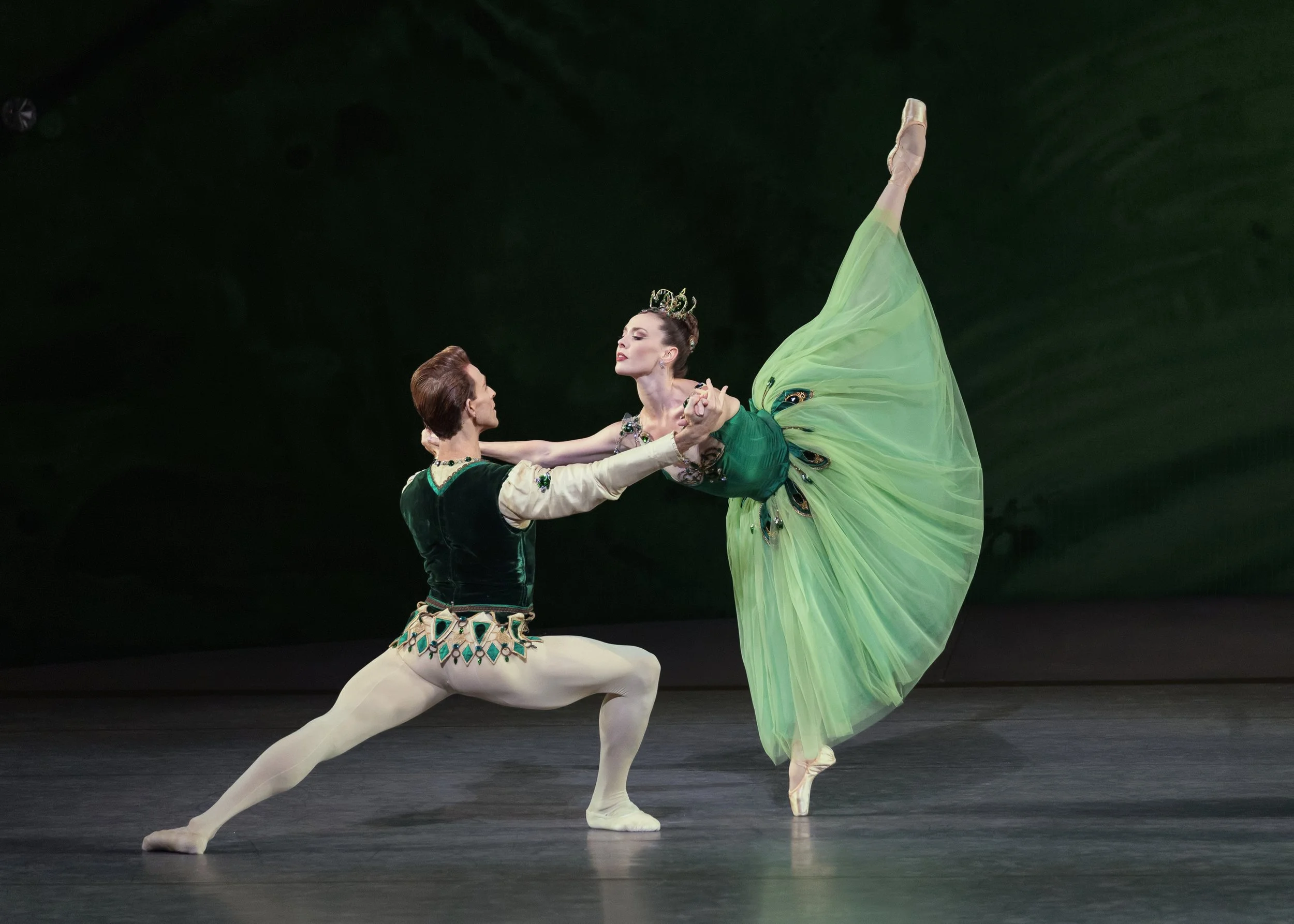
Emilie Gerrity and Adrian Danchig-Waring in George Balanchine’s Emeralds from Jewels. Photo credit: Erin Baiano
On September 22, 2026, New York City Ballet raised the curtain on their Fall Season with a gleaming performance of George Balanchine’s ‘Jewels.’
This assortment of musical and choreographic styles made for a splendid sampler of dance, presented before a nearly-full house. Heading up the orchestra was Andrew Litton, who effectively illuminated the differing compositions with great nuance and energy.
Each section carried itself gorgeously as it explored its respective gemstone and the themes each of them evoked. The opening ‘Emeralds’ was introduced with a lyrical mood from the dancers and orchestra, which paired nicely with musical touches like the earthy cellos and gliding harp to finely intimate a pastoral setting that did not clash with the opulence of the backdrop.
Principal dancers Indiana Woodward and Taylor Stanley made for a entrancing pair to open this work as they emerged from the corps with a charged yet graceful lift, with cute moments of chase or blooms of energy to contrast the mostly-relaxed and elegant tempi and choreography. Her early variation featured articulate gestures from Woodward that coupled with her light hops and nimble pointework as she reveled in the sprawling atmosphere to build to a lovely reverence closing.
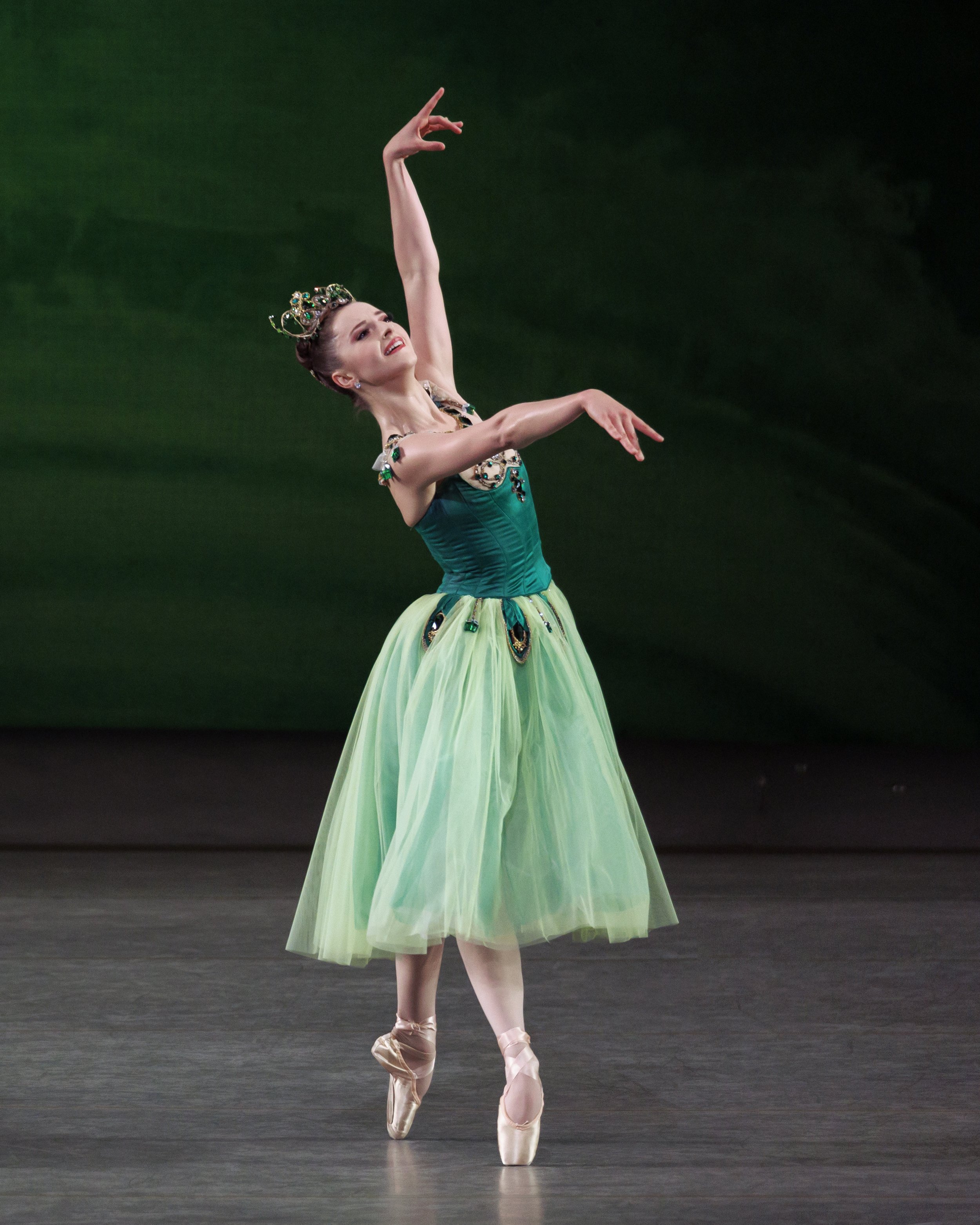
Indiana Woodward in George Balanchine’s Emeralds from Jewels. Photo credit: Erin Baiano
The second principal pairing saw Emilie Gerrity and Adrian Danchig-Waring as they beautifully took up the charge of the hushed strings through their partnered phrases; moments where her attitude melted backwards into his embrace were highly touching, making for a wonderfully romantic pas de deux.
This work also delighted with moments such as the lighthearted pas de trois from David Gabriel, Sara Adams, and Erica Pereira which carried with circling figures and flowery port de bras, at times trailing Gabriel by a beat, or joining him deftly as they went on and off stage.
Things ramped up magnetically as the seven dancers and corps filled onto the stage against the rapid trills of the violins for a thrilling pas de sept to crown this section of the ballet. Things wrapped up as beautifully as they unfolded when the corps gradually disassembled offstage, leaving the three pairs for brief repeated phrases of strolling as the women are lifted behind and set to slowly advance.
Following this was the suitably-bold ‘Rubies.’ Set to Stravinsky’s ‘Capriccio for Piano and Orchestra’ this section featured striking red beams which strongly framed the free, jazzy choreography it contains. The massive downbeat and heavy measures from the orchestra prior to the curtain rise quickly seized the audience’s attention before settling into a softer, more fanciful energy.
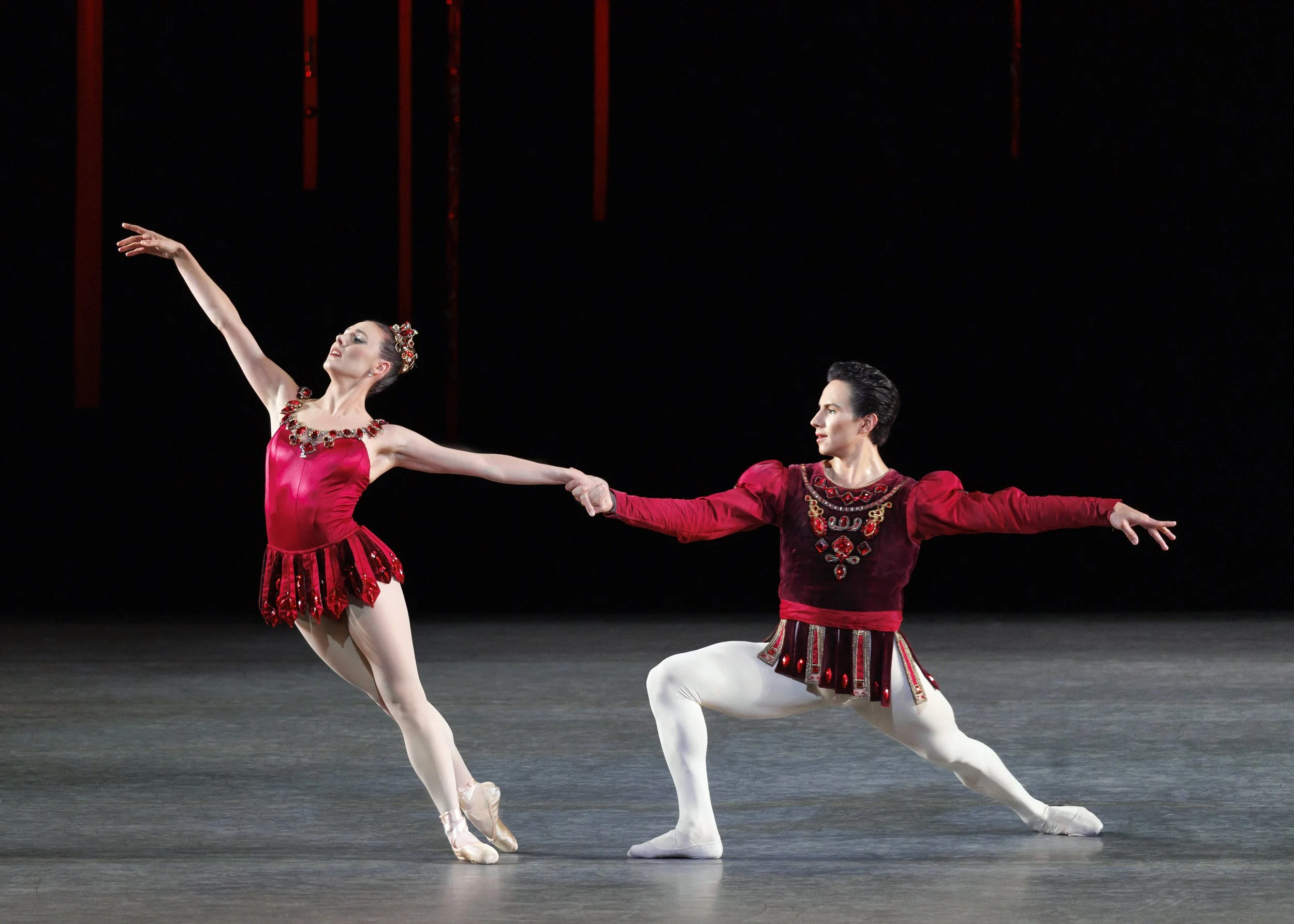
Tiler Peck and Roman Mejia in George Balanchine’s Rubies from Jewels. Photo credit: Erin Baiano
Leading up this section was principal dancers Tiler Peck and Roman Mejia, joined by soloist Emily Kikta, with the piano solo performed by Stephen Gosling. The husband-wife duo continued to astound through combinations that were as well-executed as they were expressive. This fine energy persisted even in calmer moments like the sultry posturing Peck employs with her back to Mejia, adding a passionate quality to the vivacity which comprises this section, as they shifted between the moods with tremendous flair. The sense of freedom was also contrasted by fascinating moments like how Mejia controlled Peck’s axis by her arms from behind as she lowered into an impressive combination of floorwork, accompanied by the simple, pulse-like rhythm of the lower brasses.
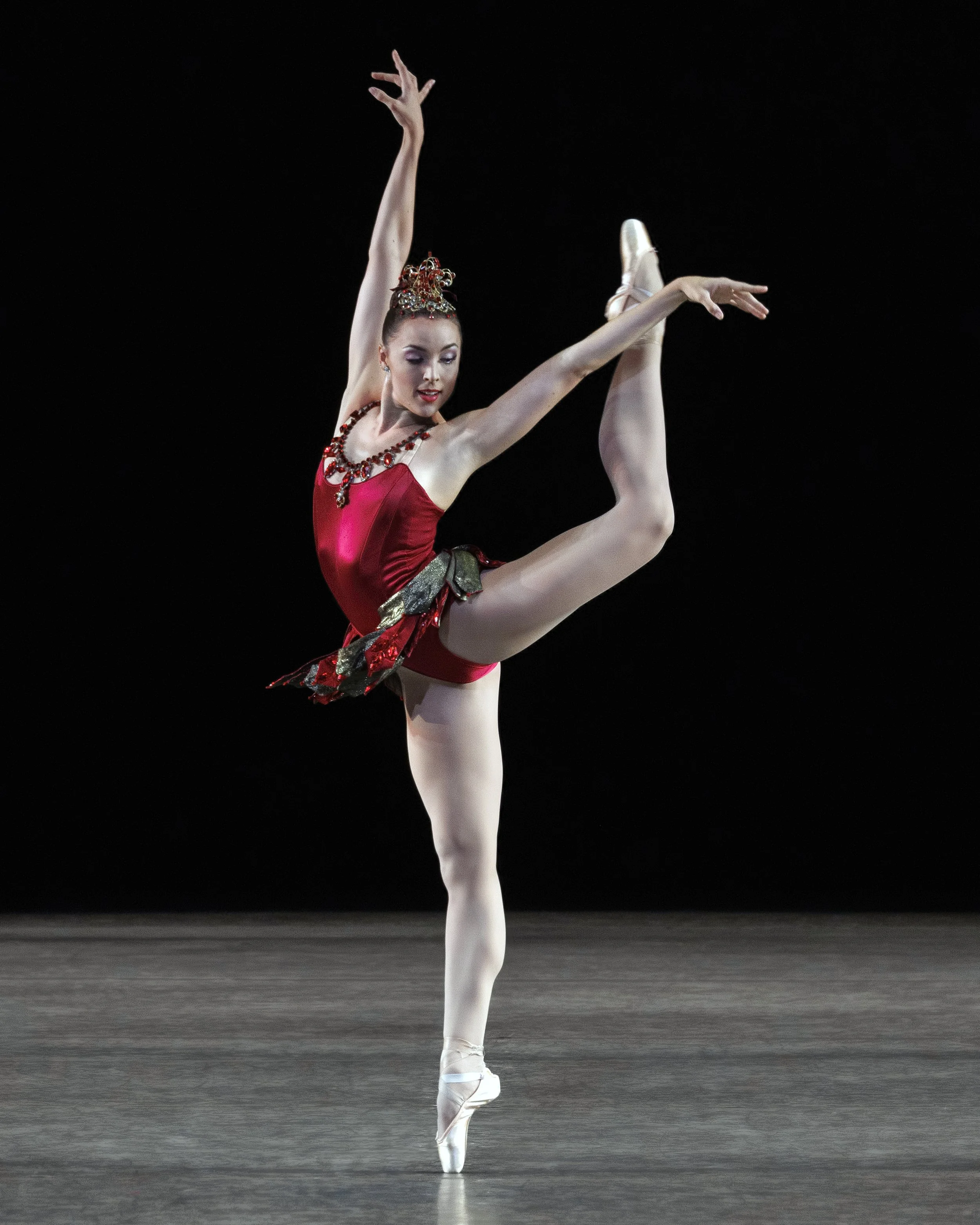
Emily Kikta in George Balanchine’s Rubies from Jewels. Photo credit: Erin Baiano
This night, Emily Kikta filled in for Isabelle LaFreniere, and made an excellent showing as she led the corps and her four male cavaliers through the measures of flowing, renverse turns, or exciting shifts in direction while at the height of her lifts. This powerful rondo, carried with touches like the jogging of the men as they scrambled into various positions, really helped drive home the neoclassical vigor of this section.
Wrapping up the evening’s program was ‘Diamonds,’ which took both the excitement and elegance to new heights. Set to music from Tchaikovsky’s ‘Symphony No. 3 in D Major,’ the corps opened with deft figures that emphasized the upper and lower planes of the stage, often outlining clear diamond shapes as they floated about with ease and charm. Dancing the principal couple in this section was Mira Nadon and Chun Wai Chan, who made a phenomenal showing through the utter finesse of their pas de deux and variations. Their partnering was exquisitely displayed through moments such as soft, extended carries, or how Nadon turned outward from a deep, supported cambre, all evoking a sense of freedom from gravity. While I’ve been fortunate enough to see both dancers in different roles across the last few seasons, this particular section proved not only a splendid showcase, but a crowning moment for both Chan and Nadon.
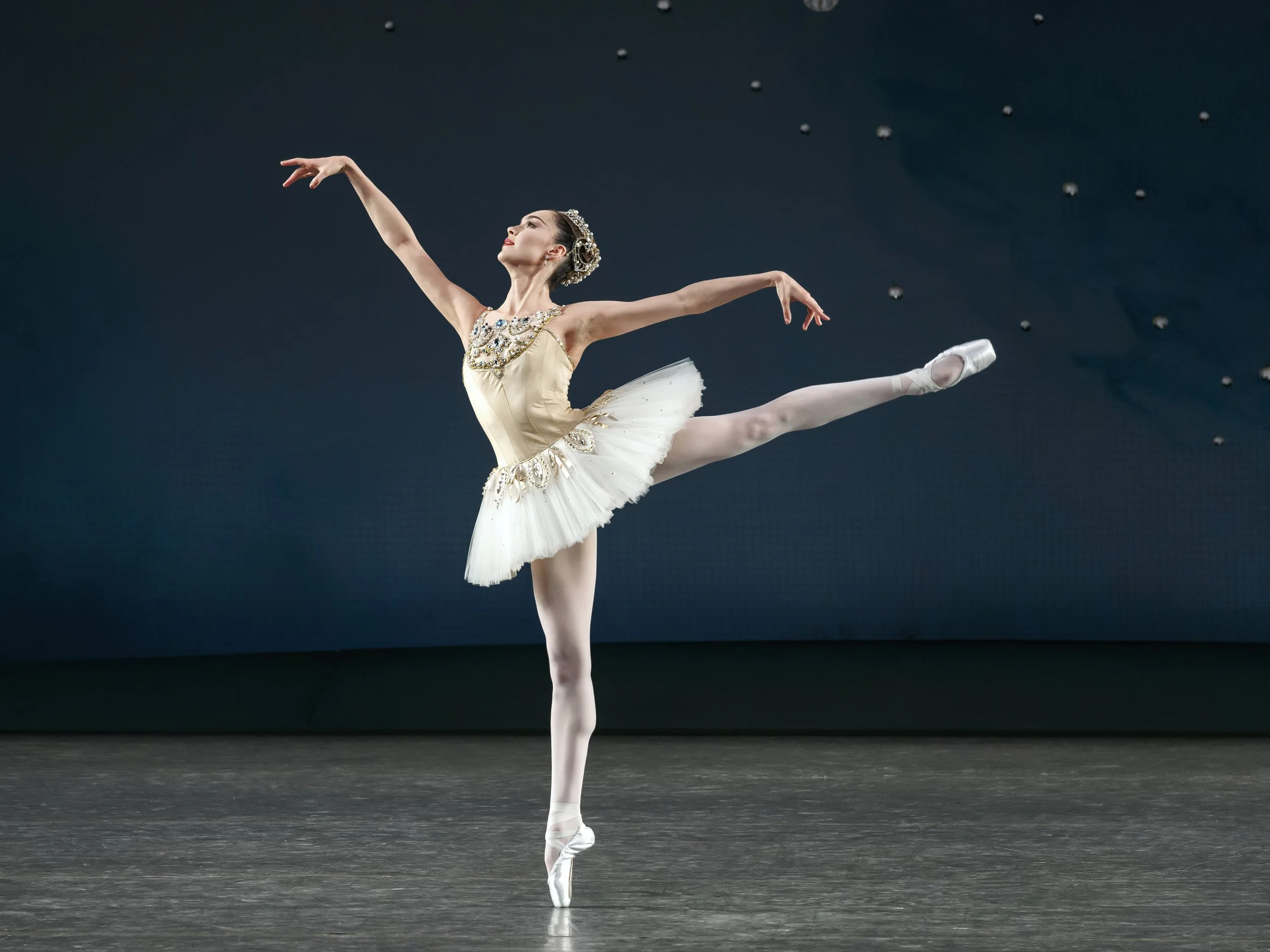
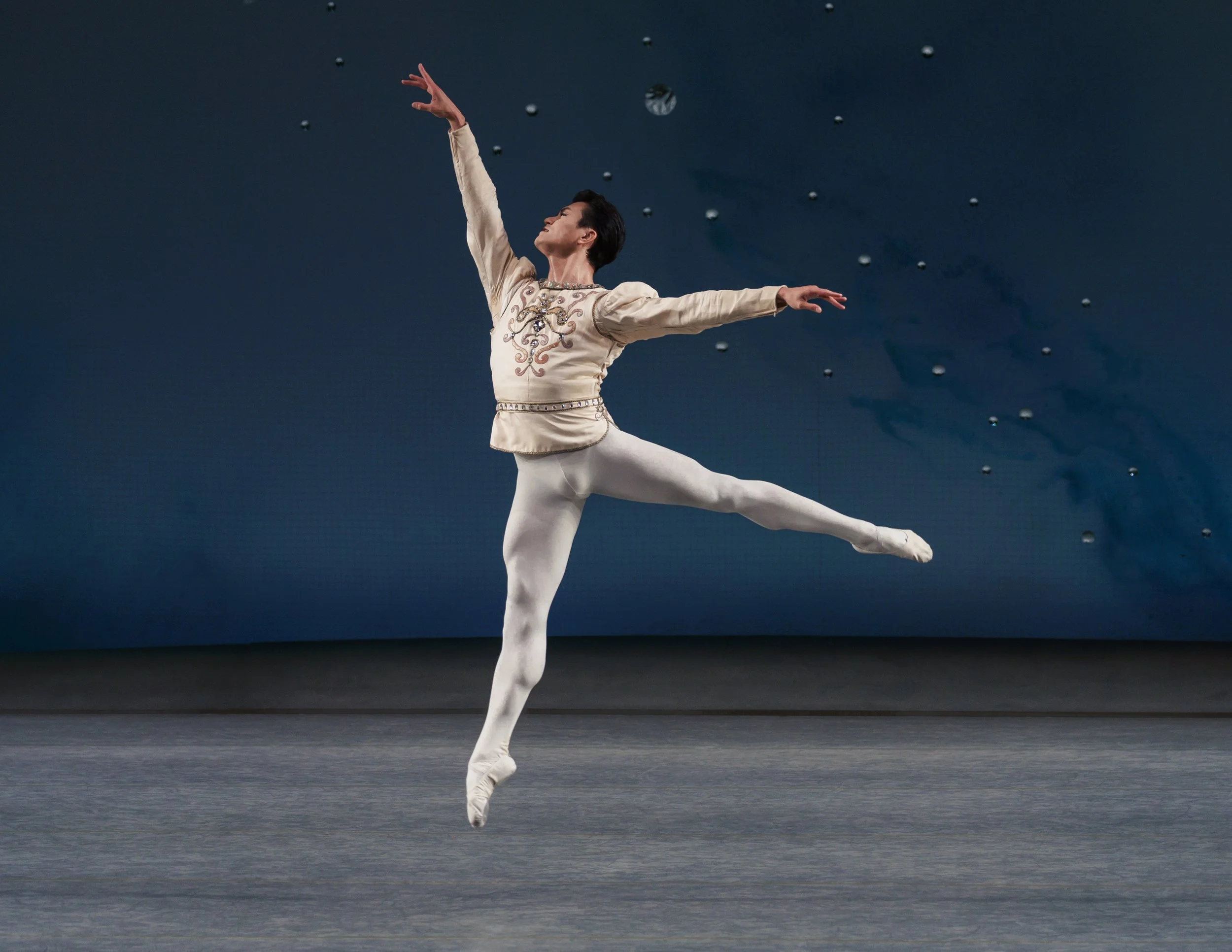
Tuesday’s performance made for an electrifying opening night from New York City Ballet, with no shortage of breathtaking moments across the three sections and varying styles. This run of performances is especially meaningful as both Adrian Danchig-Waring and Taylor Stanley ready to retire from the stage in October and February, respectively. With momentous occasions like this, and new productions and ballets underway, this season may just shape up to be one for the history books.
- Logan Martell